
fbpx

Alumni News

A Home Court Advantage

January 12, 2026

When Trey Murphy III, ’18, returns to Cary Academy as this year’s Commencement speaker, he comes not just as an NBA standout, but as someone profoundly shaped by a community that nurtured his drive, steadiness, and sense of purpose long before he took the national stage. 

Ask him what he remembers most from his time at CA, and he doesn’t mention trophies. He talks about people. About a school that “felt like one big family,” where friendships crossed grade levels as naturally as students crossed the Quad. 

“My freshman year, I was really cool with a bunch of seniors,” he recalls. “Then, in my sophomore year, I got close with the freshmen and other seniors. It wasn’t like each grade was isolated.” 

Being surrounded by “so many amazing, brilliant people,” he says, raised the bar. It shaped how he wanted to show up, not only in the classroom, but on the court, and in the world. The version of Trey Murphy the world sees now began here: grounded, humble, relentlessly hardworking, and deeply connected to those around him. 

The Slow Build 

Murphy wasn’t a prodigy crowned early. His ascent was steady, the product of daily discipline more than hype. Basketball had always been the dream, but it wasn’t until the summer before his junior year, spent training in the CA gym, that it became a genuine possibility. 

“That’s when I really shaped my work ethic,” he says. Under the demanding eye of Coach Eric Moore, he learned the difference between working hard and working with purpose. 

“Coach Moore demanded a lot from me and wanted the best for me,” Murphy says. “I always loved that about him. It was with him that I saw a path to playing professionally.” 

By the time he graduated, he left as one of the most impactful players in the program’s history, not only because of his many records (many of which still stand today), but because of how he transformed himself through commitment, humility, and a willingness to outwork everyone in the room. 

College had to check two boxes: serious academics and serious Division I basketball. Rice University offered both. His parents “didn’t play around about academics,” he jokes, and psychology quickly pulled him in. He loved thinking about how people think, how they relate to each other, and how they change. For a while, he imagined a future in sports psychology if basketball didn’t pan out. 

Plan A, as it happens, worked out just fine. 

A Season That Changed Everything 

On the court, he grew quickly. After two strong years at Rice, he felt something shifting—an internal pull toward new challenges and a higher level of competition. 

“I felt like I needed a change,” he says. “People are often afraid to face that, but sometimes you have to take that leap of faith.

Transferring meant walking away from relationships and a program he cared about. But it also became one of the first major decisions he made entirely on his own. “Trusting my instincts. That was big,” he says. “It helped me grow as a person, as a man.” 

His first year at the University of Virginia validated his instincts immediately. UVA’s system sharpened his shooting, broadened his defensive versatility, and pushed him into national visibility. His debut, a 21-point performance powered by a barrage of threes, signaled that something big had shifted. 

Over the season, he emerged as one of the ACC’s most efficient offensive threats and earned a place on the All-ACC Academic Team, reinforcing the disciplined, whole-student approach he’d carried from CA. 

That year didn’t just raise his draft stock. It clarified his identity as a two-way player built for the modern game and secured his place as a first-
round prospect. 

Betting on Himself 

In 2021, Murphy declared for the NBA Draft and was selected 17th overall by the New Orleans Pelicans. From the start, he stood out: size, shooting, versatility, and an unshakeable professionalism. 

He carved out his role quickly as an elite floor-spacer who can guard multiple positions and attack the rim with authority. Coaches praise his reliability. Teammates praise his character. Analysts praise his trajectory: upward, steady, undeniable. 

Murphy’s career hasn’t been without adversity. Injuries, including his most recent season-ending shoulder injury, have forced him to pause, reevaluate, and rebuild. In those moments, CA echoed loudly. He remembered lessons from a former teacher who taught him the practice of a growth mindset. 

“When I got hurt, I’d tell myself, ‘Okay, it already happened. The only thing I can do now is get better each day.’” That mindset turned setbacks into step-ups. 

 “With every injury, I’ve attacked rehab diligently and meticulously,” he says. “I’ve been able to come back better than I was before.” 

His advice to younger athletes mirrors the same clarity: “Control what you can control. There are so many things out of your control—you can’t put your energy there. Just keep putting steps forward.” 

The Center of Gravity 

Ask Murphy how he defines himself now, and he doesn’t list stats. He says: calm, levelheaded, understanding, loyal. He laughs when he calls himself the “therapist friend,” the one people seek out when they need someone grounded and present. He takes that role seriously. 

That steadiness comes from home. “My parents are my foundation,” he says. “They’re my best friends. They raised me to be the man I am today.” 

CA reinforced those values. Being surrounded by peers and adults who were serious about their work, their integrity, and their impact left a mark he still carries. When he entered the NBA, he felt like he was walking a “tightrope” as he found his footing. Eventually, he found his balance through authenticity. 

“I’m not trying to be like anybody else, and I feel like myself is pretty cool.” 

Giving Back 

Murphy’s commitment to young people, particularly in his hometown of Durham, runs deeper than occasional appearances or photo ops. Each summer, he hosts a back-to-school event that has grown into a community tradition. Now several years running, it brings families together for a full day of support: fresh haircuts, new backpacks, school supplies, meals, activities, and partnerships with local organizations that know the community well. 

It’s an approach that stems from empathy as much as generosity. He remembers being seven years old, meeting a favorite rapper, and being denied an autograph. “It stuck with me forever,” he says. “I told myself I’d never do that to a kid.” 

That small moment became a guiding principle: make others feel seen, valued, respected. 

Even at large community events, Murphy tries to create moments that feel personal, pausing for photos, offering encouragement, or giving a bit of extra time to a child who needs it. He’s mindful of how powerful even a brief interaction can be. 

Through camps, clinics, and direct mentorship, he focuses on three core values for young people: kindness, empathy, and respect. “If you lead with those qualities,” he says, “you’ll be surprised how often things fall into place. When you’re doing good, good tends to come back to you.” 

What Lasts 

On the court, Murphy hopes to be remembered by his peers as a truly great basketball player. Off the court, his hopes are simpler but just as resonant. 

“I want people to feel like I made their lives better in some capacity. Even something small, like a compliment or holding a door. I want to make people feel cared for.” 

As he returns to CA for Commencement, he doesn’t return as a distant star. He arrives as someone whose core was formed here, in classrooms and hallways, on courts and in friendships, in moments of quiet encouragement and honest challenge. 

If there’s one message he hopes students take with them, it’s the one guiding him now: “Be where your feet are. Make the most of the moment you are in.” 

Because presence, he knows, is where connection—and possibility— begins.

Written by Mandy Dailey, Director of Communications

Magazine of CA

Leading the Way

Magazine of CA

Charging ahead.

CA Curious

Glimpsing the future

Donor Stories

Promise Made Possible

January 12, 2026

Cary Academy is setting a new standard for access and affordability in independent education. Introducing Charger Promise—free tuition for families earning $100,000 or less, with significant, scaled support extending far beyond that. 

Grounded in our founding values and propelled by an alum whose own CA beginning transformed her future, Charger Promise is more than an enhancement to financial aid. It marks a defining moment in CA’s evolution, a bold affirmation that excellence and access belong together, and that our future is brightest when more students can step fully into it. 

Charger Promise makes CA both imaginable and attainable for families who might not have otherwise considered an independent school. For students receiving assistance, it removes barriers to full participation in school life, from debate tournaments to artistic projects to prom tickets. And across the CA community, classrooms, conversations, performances, and programs are enriched by the inclusion of a broader range of voices and experiences. 

A founding value 

It also reaffirms a truth that has guided Cary Academy since its earliest days. Founding visionaries Dr. Jim and Ann Goodnight and John and Ginger Sall believed that an exceptional education should be accessible to all qualified students, regardless of financial circumstance. For nearly three decades, the school has lived that belief, providing substantial financial assistance across a wide range of economic profiles. Last year alone, CA awarded $3.1 million in financial aid, meeting 100% of demonstrated need for 128 families. 

Endowed funds from the Goodnights continue to underwrite much of CA’s financial aid. Believed to be the first initiative of its kind for independent schools in the Southeast, Charger Promise builds on that base, adding new resources to expand opportunity for the next generation of Chargers.  

Opening doors 

Fittingly, one of the people helping drive Charger Promise is someone who once entered CA through financial aid herself—and whose life was transformed because of it. 

Holly May, ’05, didn’t set out to become an entrepreneur, a nonprofit founder, or the philanthropic spark behind Charger Promise. But her experiences at Cary Academy and the possibilities they unlocked shaped every step that followed. 

“CA opened my eyes to possibilities I hadn’t dared imagine,” Holly reflects. “My potential wasn’t just noticed; it mattered and was nurtured. That kind of belief stays with you long after you leave.” 

Over the years, Holly and her husband, Travis May, ’05, a fellow alum, have kept CA close (so close, in fact, that they were married on the Quad). As longtime, engaged alumni, and through Holly’s service on the Board of Directors, they have championed broader access for future Chargers. Their gifts have helped move a long-standing aspiration into launch-ready reality, extending the same transformative opportunity Holly once received to the Chargers who will follow. 

Visionary impact 

Holly’s story offers a powerful lens into what Charger Promise represents: the transformative impact of access and the responsibility to extend it forward. 

When Holly arrived at CA as a sixth grader supported by financial aid, she stepped into a community that pushed, stretched, challenged, and believed in her. In her words, CA was “the delta”—the turning point—in her life. The catalyst that reshaped her sense of what was possible. 

Her path since—spanning entrepreneurship, nonprofit work, and philanthropy—reflects a throughline of curiosity, purpose, and commitment to opening doors for others. 

In 2025, Holly founded Exponential Scholars, a nonprofit organization dedicated to expanding access to transformative educational experiences for underrepresented youth in North Carolina. Through scholarships, mentoring, and enrichment opportunities, the organization mirrors the values that shaped her own life—the same values that drive Charger Promise. 

“Potential is everywhere, yet life-changing opportunity is not,” Holly says. “And when you clear the barriers that stand in the way—whether at CA or in communities across North Carolina—you can dramatically change the course of a young person’s life.” 

That alignment of mission and personal experience made supporting Charger Promise especially meaningful. 

“When CA started rethinking what affordability could look like, it resonated with me,” she says. “This place shaped who I became; it changed my life. Opening that door for others just felt right.” 

Promise to possibility 

When asked what she hopes this initiative communicates, Holly is clear: “Possibility. More than anything, I want families across the Triangle to feel that CA is truly accessible to them. That they can belong here and thrive and unlock their child’s potential.” 

Her words echo what her own teachers once saw in her. They also capture the purpose of Charger Promise: not simply to assist families, but to expand who gets to imagine themselves here—and to broaden the futures shaped by Cary Academy students. 

For Holly, it is a full-circle moment. For CA, it is a strategic milestone. And for the students who will walk through the door thanks to this initiative, it marks the beginning of futures that might once have felt unattainable.

A new model for access 

Quietly piloted last year for admitted families, the expanded Charger Promise is now open to both new and returning Chargers for the 2026–2027 academic year. 

Under the expanded financial assistance program:

• Families with a combined household income of $100,000* or less will pay no cost to attend Cary Academy, including free tuition, dining, transportation, and before-care and extended-day programs. *assumes asset profile consistent with income

• Families with a diverse range of economic profiles above that threshold qualify for reductions covering anywhere from 54–95% of the cost of attendance. 

• Supplementary Discovery Stipends provide all students receiving financial assistance with support for non-tuition expenses that might otherwise limit participation (e.g., academic competitions, global learning excursions, tutoring, enrichment programs, athletic gear, specialized activities, etc.) 

Mission in action

Charger Promise is one of the first public expressions of Cary Academy’s new strategic plan, one grounded in cultivating a learning community where purpose thrives, opportunity is accessible, and wellness and equity are foundational. 

“Affordability isn’t just a financial question,” Head of School Dr. Mike Ehrhardt notes. “It’s a values question. It asks: Who can be here? Who feels welcome? Whose potential are we committed to nurturing? 

“With Charger Promise, we’re proving that excellence and equity can, and must, go hand in hand. It’s our mission in action—an expression of who we are and who we aspire to be.” 

CA’s commitment to access and affordability extends well beyond this initiative. It shows up in robust student support systems, intentional access to experiential and real-world learning, transportation solutions that connect more families to campus, and curricular pathways that honor student agency and purpose. 

Together, these efforts point toward a future in which access is not an aspirational goal, but a defining feature of the CA experience. 

“We talk often about preparing students to shape the future,” says Ehrhardt. “For that to ring true, the opportunity to be here—to learn, to grow, to discover purpose—must be within reach. Charger Promise helps make that possible.” 

Written by Mandy Dailey, Director of Communications

Athletics

Charger student-athlete earns national recognition

Athletics

Chargers close out a fantastic spring season

Alumni News

Trey Murphy (’18) reveals the formula for his leap to the NBA

Alumni News

From Code to Cure

October 17, 2025

When Mark Hallen, ’06, arrived at Cary Academy as a self-described “bookish” student with a budding interest in math and science, he could never have imagined that one day he’d help turn what once felt like science fiction into reality. Today, he is doing just that, leading a team of scientists in designing cancer drugs with the aid of AI.

As co-founder and Chief Technology Officer of Ten63 Therapeutics, a Durham-based biotech startup, Hallen is pioneering a radically new interdisciplinary scientific approach—one at the cutting edge of laboratory science, computational molecular modeling, and artificial intelligence—to create effective therapies that target some of the most stubborn and difficult-to-treat cancers.  

His journey is one of purposeful exploration that took root in his high school chemistry labs and classrooms and has evolved into a career focused on saving lives.

The catalyst 

Hallen traces his professional beginnings directly to Cary Academy. “CA is really where I started getting into what I’m working on now—especially on the chemistry side,” he reflects. A student who thrived in both science and math, he found particular inspiration in the challenges of Mr. Gray Rushin’s chemistry class. 

But it was a history course that hinted at something more profound, a reminder that science didn’t exist in a vacuum. “It offered a different kind of lens—how systems impact people,” Hallen recalls. That early insight stuck, shaping the kind of problems he seeks to solve in his career: significant, real-world challenges with human consequences. 

It wasn’t just CA’s academics that proved formative. Running cross-country and track offered essential life lessons—grit, persistence, and a team-oriented mindset—that he draws on today. “Research can be like a race where you’re all training together and helping each other improve, but at the end of the day, everyone still has to do their part, to run their own race,” he says. 

After CA, Hallen headed to Duke University, double majoring in chemistry and math. He quickly found himself drawn to interdisciplinary work, attracted to problems that sat at the intersection of biology, computation, and medicine. It was during an early research stint in a cell biology lab that he discovered a surprising strength, not at the bench, but in computational analytics. 

“At the time, we were studying fruit flies, using microscopy to study cell division and gene expression. I started building algorithms to analyze the data we were collecting,” shares Hallen. “That was a turning point; I realized I was contributing more with my digital analysis than the benchwork,” he explains. That shift—from hands-on experiments to algorithmic coding and computational modeling—would define the next decade of his research.

From microscope To molecule 

At Duke, Hallen became fascinated by the potential of computers to model living systems. While “computational biology” can mean many things, for him it came down to this: using math and code to understand how biological systems work—and how to fix them when they don’t. 

He was especially drawn to proteins—the tiny building blocks of life involved in nearly all cellular processes. In high school, the idea of designing them on a computer felt like science fiction. But by his senior year at Duke, Hallen learned of the Donald Lab, where that fiction was fast becoming reality. Led by Dr. Bruce Donald, James B. Duke Professor of Computer Science, Mathematics, Chemistry, and Biochemistry at Duke University, the lab had just published research showing how computational tools could be used to design and reshape proteins for entirely new functions. 

“It was the first time I saw that you could really plan molecular behavior on a computer with a high degree of accuracy,” Hallen recalls. 

He joined the lab for his PhD, delving deep into algorithmic modeling and developing methods to search efficiently through an almost unfathomable universe of possible molecules to identify those most likely to succeed as drugs. 

How vast is that search space? “There are about 10⁶³ possible drug-like molecules,” Hallen explains. “That’s one followed by 63 zeros. We can’t begin to test all of them in a lab—or even simulate them one at a time on a computer—to find the one that might be a useful drug for a specific application.” 

In the face of that challenge, Hallen set out to design algorithms to search intelligently through that vast chemical space, identifying the best candidates with the highest mathematical guarantee of success. In theory, it’s a solution that shares a similar logic to internet search engines: not perfect, but fast, innovative, and shockingly effective.

Algorithm to enterprise 

That insight—applying sophisticated search algorithms to molecular design—became the foundation of what Hallen would later call molecular voxel theory (MVT). This algorithmic framework breaks molecular movement into multi-dimensional units (the higher-dimensional equivalent of pixels) that can be modeled and searched with remarkable precision, enabling high-resolution drug design. 

A subsequent role as a research assistant professor at the Toyota Technological Institute in Chicago gave Hallen broad latitude to develop new directions for molecular voxel theory. Some of these directions could have a high impact on the design of new medicines, but would require experiments beyond the budget available in that role. Then came a call from a former labmate: “I think we’re ready to start a company.” 

The timing was right. The mission was clear. In 2018, they launched Ten63 Therapeutics—the name a nod to the staggering molecular space looming before them—with Hallen leading research and co-founder Marcel Frenkel handling the business side. His former mentor, Dr. Bruce Donald, chairs the company’s scientific advisory board.

Cracking the undruggable

Ten63’s first challenge was an ambitious one: to design a molecule that inhibits Myc, a protein overexpressed in many aggressive and “undruggable,” or difficult-to-treat, cancers. Myc isn’t mutated in most cases; it’s just turned up too high. “It interacts with DNA and speeds up cell division,” Hallen explains. 

Ten63’s solution? Combine Hallen’s algorithms with advanced machine learning through their proprietary BEYOND platform, an AI framework that explores vast chemical spaces with greater efficiency and precision than traditional trial-and-error methods. Trained on simulations grounded in first-principles physics and refined by real-world experimental feedback, BEYOND doesn’t just predict what might work; it reveals why a molecule works and how it can be optimized to meet specific therapeutic goals. 

That insight is essential in designing a Myc inhibitor, which requires modeling how candidate molecules and the Myc protein interact, flex, and twist in 3D space. From there, molecules are refined, synthesized, and tested through increasingly complex rounds of experimentation to determine whether they behave as intended, from cell to mouse and, eventually, to human trials. 

It’s painstaking, high-stakes work, but rewarding in its promise. “It’s a lot of iteration,” Hallen says. “But we just had our first experiments show that one of our compounds slowed tumor growth in mice.” 

Discovery to impact

Ten63 aims to advance its lead compound into human trials by 2027. “That would be a huge milestone,” says Hallen. But for him, success has always been about something more. “Improving outcomes for patients—that’s the real success.” 

Hallen remains energized by the challenges ahead, bringing together data, domain expertise, and determination to unlock new frontiers in medicine. But he’s also thoughtful—and clear-eyed—about the rapidly evolving landscape of biomedical research. Artificial intelligence, he says, has changed everything. 

“There’s been so much hype that it’s crowded out other research directions and methodologies,” he reflects. “But not everything needs to be solved by AI alone. Some of the most promising advances in our field come from combining machine learning with deep domain knowledge and experimental innovation.” 

According to Hallen, the most effective work lives at the intersection of AI and hands-on science. “That’s a hard part of the work—being in a position to straddle both domains and know when you’re making mistakes in either one,” he says. If he didn’t understand how molecules behave in the real world, he explains, he’d be designing things that chemists might immediately reject. And if he didn’t understand the modeling, he wouldn’t know how to explore the search space effectively. 

That deep, dual fluency—in both molecule and model, code and machine learning—isn’t just a technical advantage. It’s a reflection of a broader ethos that defines Hallen’s work: a belief that transformative progress happens at the intersection of disciplines, where science, technology, and humanity converge. 

It’s an ethos rooted in his earliest experiences at Cary Academy, where a passion for chemistry and math met a systems-level view of the world. Today, it drives his work at the forefront of biotech innovation—a path defined not just by technical breakthroughs, but by a commitment to purpose and impact. With each algorithm and experiment, Hallen isn’t just imagining the future of medicine—he’s helping to build it, one molecule at a time. 

Written by Mandy Dailey, Director of Communications

Magazine of CA

Democratizing Debate

6th

MS Science Olympiad Team Shines

Magazine of CA

Equity Matters

Alumni News

Making Change Drop by Drop

January 7, 2025

Social entrepreneur Serena Advani, ’13, is turning her passion for sustainability into a groundbreaking business that is as innovative as it is impactful. As the founder and mastermind behind Sea Drop—a preservative-free, waterless skincare line—Advani is making waves in the beauty industry by tackling two of its most pressing issues: plastic waste and carbon emissions.

Advani’s entrepreneurial spirit sparked early, but it wasn’t until she launched her first venture—The Little Green Bus, a local produce delivery service—as a student at CA that she seriously considered entrepreneurship as a career. This project, born from her entrepreneurship club’s entry into the TiE Young Entrepreneurs Business Plan competition, set her on a path that would ultimately merge her commitment to make a difference with her love of science and business.

After graduating from CA, Advani pursued a double major in cognitive neuroscience and operations, information, and decisions at the University of Pennsylvania’s Wharton School. Initially drawn to med school, she soon discovered a fascination with human behavior and psychology, which led her to explore consumer behavior in the marketplace. “If you can apply insights from psychology and neuroscience to consumer products, you gain an edge that’s hard to beat,” Advani explains.

After college, Advani began her career at the global consulting firm McKinsey & Company, where she delved into multiple sectors before finding her true calling in the beauty industry. Her journey accelerated when she joined Estee Lauder Companies, where she helped shape global brand strategy for Bobbi Brown Cosmetics. Realizing the need for further growth, she pursued an MBA at the prestigious Wharton School, where the idea for Sea Drop was born.

Sea Drop isn’t just another skincare brand; it’s a movement towards sustainable beauty—a mission deeply personal to Serena, influenced by her South Asian heritage. “As a child, my mom and I made Indian face masks and cleansers in our kitchen using recipes passed down through generations. The dry ingredients we used—like turmeric, chickpea flour, and sandalwood—could be mixed with water before application.”

This inspiration took on new urgency when Alvani discovered the staggering environmental impact of the beauty industry. “Most American skincare products are 90 percent water, which requires single-use packaging,” explains Advani. “Over 120 billion units of this packaging—mostly plastic—are produced each year, and less than 9% is recycled. This accumulates in our oceans, and the heavier water-based products are more carbon-intensive to ship, worsening the environmental toll.

Recalling the traditional Indian dry beauty formulas from her youth, Advani had a bold realization: “Water-based skincare doesn’t have to be the standard,” she says. “We can rethink the water-based formulations that have been dominant for the last 50 years and replace them with dry formulations that have been used for thousands of years. And we can do it in a way that is zero-waste and positive for the planet.” 

This vision became Sea Drop, a patent-pending, waterless cleanser tablet that eliminates single-use plastics. Concentrated ingredients are compressed into unit-dose tablets that activate with tap water and dissolve into a foamy, preservative-free face wash. Refill kits are packaged in zero-waste, biodegradable tubes.

Since its launch last year, Sea Drop has gained significant media attention—from the Today Show to InStyleto Harper’s Bazaar—and received overwhelmingly positive feedback from consumers and beauty editors alike.

But Advani’s journey is just beginning. With plans to expand Sea Drop’s product line to include skincare, haircare, and body care—all in the same waterless format—she’s poised to continue leading the charge towards a more sustainable beauty industry.

Reflecting on her journey, Serena advises young entrepreneurs: “Don’t let anyone underestimate you because of your age. You can still make a difference, start a company, or create change in your community. Age shouldn’t stop you from trying.”

Written by Mandy Dailey, Director of Communications

Athletics

Varsity cross country teams take TISAC trophy

CA Curious

Community Vignettes

CA Curious

Looking ahead to a new ‘typical’

Alumni Spotlight

Artful Healer

August 17, 2023

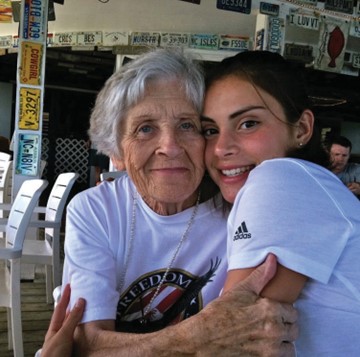
Emma Astrike-Davis, M.D., ’14, was in sixth grade when she helped her great-grandmother move into a nursing home after a prolonged hospital stay. She saw how deeply the loss of independent living impacted her great-grandmother, and she made the effort to visit frequently and bring artwork and furnishings to help alleviate that loss. When she told her great-grandmother that she wished that everyone living in the nursing home could have their own artwork, her great-grandmother gave her encouragement: you can make that happen.

“My great-grandmother was very much that kind of person. She survived many challenges in her life, and she firmly believed that if you want change to happen, you should be the one to do it,” says Astrike-Davis with a smile. It is a message that she has taken to heart as a guiding life principle—one which has led to a promising career as a physician committed to improving equity in healthcare and as founder and president of a growing international nonprofit, Art for Hospice.

In both roles, Astrike-Davis’s passion—for forging authentic connections with her patients and easing the human condition through the exercise of empathy, kindness, and compassion—is evident.

“When I graduated medical school, my mentor, Dr. Pouru Bhiwandi gave me a paraphrased quote from Hippocrates to guide my practice: ‘We cure sometimes; we treat often, but we can always provide comfort,’” shares Astrike-Davis. “We don’t always get wins in medicine; we often face tough situations where there are no ideal solutions. But when you can navigate difficult decisions alongside patients and their families, when you can bring clarity to chaotic situations or significant life changes, when you feel like you are able to truly help a patient and their loved ones—that is an immeasurable reward.”

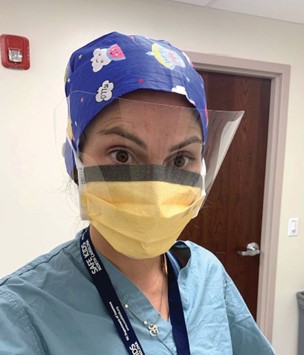
Currently beginning her second year of internal medicine residency at the University of North Carolina, Astrike-Davis intends to subspecialize in rheumatology, a decision inspired, fittingly, by her own family.

“My first exposure to rheumatology was attending a doctor’s appointment with my grandmother,” shares Astrike-Davis. “She was diagnosed with rheumatoid arthritis (RA) at a time when treatment options were more limited. The development of biological therapies eventually brought my grandmother relief towards the end of her life and impressed upon me the necessity of ongoing medical research.” “I was also inspired by the relationship my grandmother had with her rheumatologist. RA can be a debilitating disease, but she was committed to helping my grandmother remain able to enjoy all the things that were important to her, like her yoga class, volunteer work, or simply being with her grandchildren. I remember being touched by how well she knew my grandma and her commitment to helping her enjoy her life. That is the kind of relationship that I want to have with my patients.”

BEYOND THE CLINIC

Interested in medicine from a young age, Astrike-Davis credits Cary Academy with giving her the time and space to explore her nascent interest. During her junior-year Discovery Term, she shadowed a doctor in infectious diseases at a children’s hospital in Florida.

“I went to his lab, his lectures, and then to his clinic and rounds at the hospital. The breadth of what he did—translating research to practice— was fascinating,” reflects Astrike-Davis. “It spoke directly to interests that Mr. Rushin had fostered in my AP chemistry classes—about how to understand the world starting at a molecular level.”

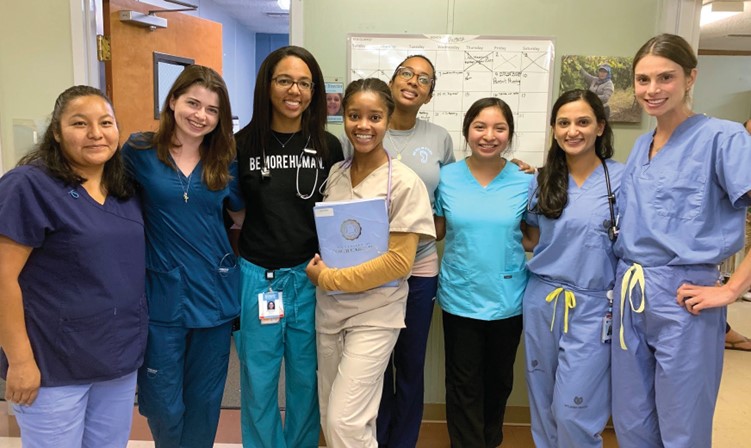
Astrike-Davis was particularly inspired by the doctor’s efforts outside the clinic, which sought to bring vaccines to marginalized children and adults who might not otherwise have access. Intrigued by “seeing practitioners take medicine outside of clinic walls,” Astrike-Davis would go on to be a Morehead-Cain Scholar at the University of North Carolina at Chapel Hill where she majored in public health and nutritional biochemistry before attending medical school.

A series of volunteer opportunities and fellowships brought valuable firsthand experience with the disparities and inequities within American healthcare systems, solidifying Astrike-Davis’s passion for expanding access to healthcare for underserved populations.

As an MSTAR Fellow at the American Federation for Aging Research and President of the UNC American Geriatrics Society, she sought to bolster support and research opportunities for aging populations who are often excluded from medical trials, despite representing primary targets for treatments.

“If your only interaction with elderly populations is in the clinic and the hospital, you get a very narrow window of understanding. To me, an important part of our job in medicine is to understand who our patients are in the community and what their goals are for the future.”

As co-President of the Farm Worker Student Health Alliance and Schweitzer Fellow, Astrike- Davis worked to educate med students about health issues facing migrant workers and sought to expand migrant farmworker access to insurance and healthcare. Traveling to migrant farmworker camps in Benson, North Carolina, she spent evenings going person-to-person enrolling workers in low- cost health insurance. During the day and in after- hours clinics, she provided Spanish interpretation services at health clinics, helping to bridge a language barrier between providers and patients to help ensure equitable care for migrant workers.

Making a Difference

For many, tackling some of the most intractable issues in healthcare might be daunting, but for the perpetually curious Astrike-Davis, it is motivating.

“The more I learn in my career in medicine, the more I want to know. There are many conditions that lack understanding and treatment. Beyond that, there are many communities that lack access to healthcare to receive treatment. These are the challenges that we all face, and the challenges that I look forward to tackling for the rest of my career.”

Astrike-Davis credits her parents— Nancy Astrike, who serves on the CA PTAA Diversity Committee, and Joan Davis, who currently serves on Cary Academy’s Board of Directors—for instilling in her the resiliency to follow her inner voice to do difficult work and a call to serve her community.

“My parents are trailblazers in lots of wonderful ways—one small way is that they are two women. When I started at Cary Academy, I did not know any other students with gay parents. Now, I’m pleased to know there are many students at CA with nontraditional families; I love how far we’ve come as a community in just 10 years!”

“When my parents chose to start our family, it was not the easy choice to make. By making that choice, and taking pride in me, Evan and the family that we create—they taught us the value of remaining true to yourself despite challenges. They taught us to find supportive communities and continue to build them.”

ART FOR HOSPICE

Founded by Astrike-Davis when she was only 12 years old (and in direct response to her great-grandmother’s challenge), Art for Hospice aims to share student art with individuals residing in local nursing homes, hospitals, and hospices.

As president, Astrike-Davis raises funds to purchase blank canvases and supplies, cultivates partnerships with schools and museums, and facilitates their relationships with local healthcare facilities in their respective areas. To date, Art for Hospice has distributed over 6,000 pieces of student art to participating organizations across the globe and received both national and local recognition for its impact.

Last year, Astrike-Davis partnered with her brother, current CA student, Evan Astrike-Davis, ‘24, and CA’s Upper School Art Club on a student-led fundraiser at Cary Academy, which raised over $500 to support Art for Hospice.

“The funds that CA students raised are critical to allowing Art for Hospice to partner with other schools that don’t have the same resources. It allows us to expand the program to further communities that might not otherwise be able to participate,” says Astrike-Davis.

ART FOR HOSPICE

Written by Mandy Dailey, Director of Communications

CA Curious

The Work Ahead

CA Curious

Mission Critical

Alumni News

Trey Murphy III (’18) picked by the Pelicans in NBA Draft

Homecoming

Alumni News

CA to celebrate Homecoming with fall and winter festivities

September 30, 2021

Who doesn’t love an opportunity to celebrate Chargers past and present? While the last 18 months of pandemic conditions have sadly limited our capacity for in-person celebrations, CA is doubling down (literally) to make up for lost time this fall and winter. In celebration of its 25th anniversary, CA plans to offer not one, but two, separate Homecoming festivities—two chances to gather as a community, welcome alumni home, and reconnect.

With COVID rendering the future uncertain, Director of Development Ali Page says it was essential to plan an alumni homecoming event early this fall, while it is still pleasant to gather outside in a COVID-safe way. “Friday Night Lights is such a fun night and one that represents fond memories for so many of our alums. As we looked for flexible, COVID-safe opportunities to welcome our alums home, it was an obvious choice.”

Homecoming: Friday Night Lights edition will take place Friday, October 29. Alums will have an opportunity to join in the community tailgate, cheer on the student flag football teams, and reconnect with each other and the CA community.

For students and alums looking forward to and planning for a traditional December CA Homecoming, fear not. “We recognize that our December Homecoming is a beloved tradition and one that we very much hope to honor,” offers Kevin Jones, Athletic Director. After a week of Spirit Week community festivities, alums will again be invited back to campus for a culminating community celebration on Friday, December 17 (COVID-willing).

“Homecoming doesn’t have to be a—shouldn’t be—a singular event,” smiles Page. “Our community is so important and something to be celebrated. We want to give our alums and current students as many fun opportunities as possible to safely connect as a community, have fun, and make new memories at CA. We look forward to welcoming everyone to campus this fall AND winter. And to our alumni: we’ve missed you. We’re excited to welcome you home in person. It’s been too long.”

Written by Dan Smith, Digital Content Producer and Social Media Manager

Head of School Search

Head of School Search: Finalists to Visit Campus

Alumni News

CA Alumnae in healthcare opens up, shares what she’s learned

Upper School

CA’s Conrad Hall recognized as ‘Outstanding Educator’ by University of Chicago

Trey Murphy and Priya Desai

Alumni News

Trey Murphy (’18) reveals the formula for his leap to the NBA

September 16, 2021

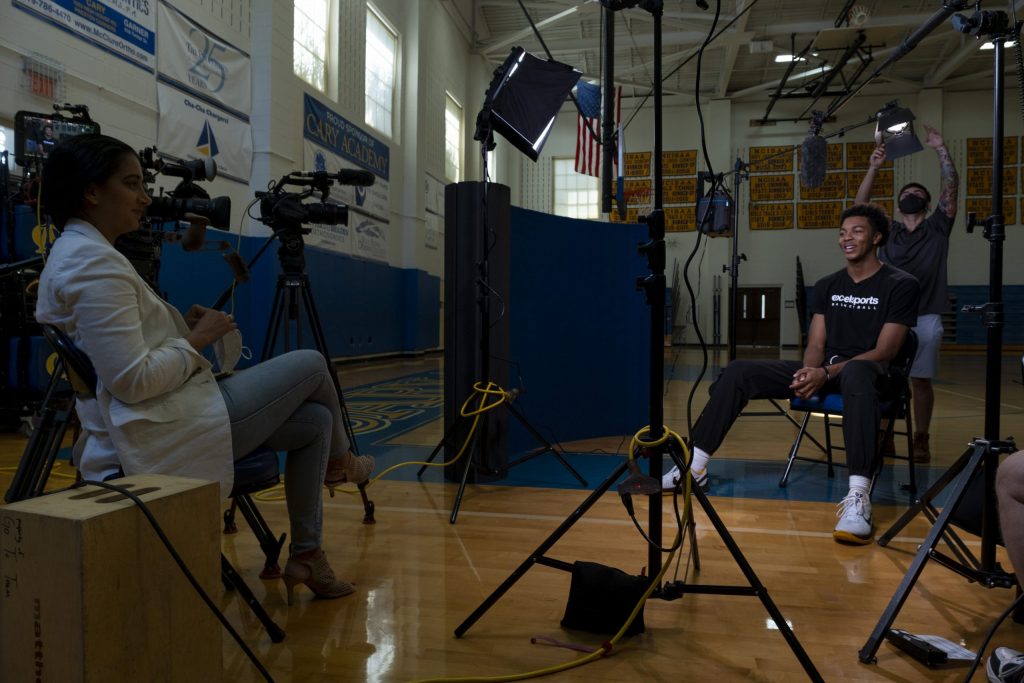
After an explosive debut in the NBA Summer League that has already led to rookie of the year whispers, Cary Academy’s first alum to be selected as an NBA draft pick – Kenneth ‘Trey’ Murphy, III (’18) – recently sat down with Sports Illustrated’s Priya Desai for an interview hosted in CA’s Fitness Center gym.

Murphy returned to his “home gym” to discuss his path from Cary Academy to a career in basketball, the impact of COVID on his collegiate career, and the role that his love for psychology plays in his approach to the game. 

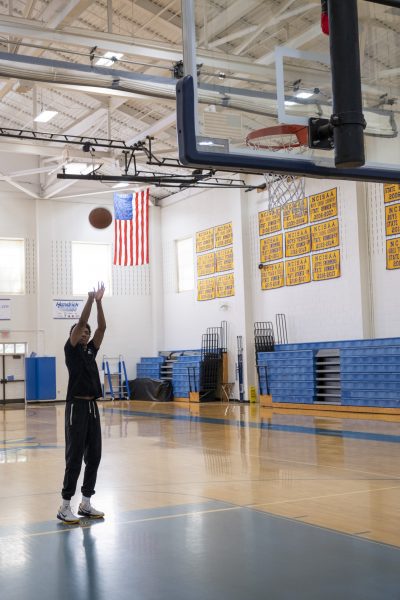
Afterwards, Trey showed off his skills in the FC gym, while the cameras rolled. 

Trey Murphy practicing in Cary Academy's FC gym

Before standout performances at Rice University and the University of Virginia, Murphy, from Durham, played varsity basketball at CA. His father, Kenneth, played at East Carolina University from 1986-88.

During his Cary Academy career, Murphy averaged 22 points, while shooting 53% from the floor, 45% from three, and 93% from the free-throw line. He is Cary Academy’s all-time leader in field goals made, three-pointers made, and free throws made. During his senior year at CA, Murphy the Chargers to a 14-8 record, averaged 24.7 points and 7.4 rebounds while shooting on 49.4% from the floor, 43.6% from 3-point range, and 85.8% from the free-throw line. He was named All-Metro by the News & Observer. As a junior, he averaged 22.3 points, 4.3 rebounds, and 2.8 assists while shooting on 54% from the floor, 47% from three, and 93% from the free-throw line. He earned Triangle Independent School Athletic Conference (TISAC) All-Conference honors.

Written by Dan Smith, Digital Content Producer and Social Media Manager

Language Arts

Poetry and Hip-Hop at CA

Community Conversations

Follow the leaders: Spotlight on Leadership In Crisis Program

CA Curious

Teaching beyond a single story

Kristin Andrejko

Alumni Spotlight

Healthy Curiosity

September 1, 2021

As an infectious disease epidemiologist, PhD student Kristin Andrejko has focused her life on public health and helping communities on the path to wellness. Now, with an eye towards public health policy and a focus on how vaccines serve to protect those most vulnerable to the ravages of disease, she finds herself on the front lines of some of the most pressing global public health battles—from malaria to COVID-19.

“The past 16 months have certainly highlighted the incredible value of vaccines in improving all aspects of our physical, social, and economic health. As an epidemiologist, my day job is to quantitatively analyze public health programs like routine vaccination campaigns to help mitigate the risk of future infectious disease outbreaks.”

Andrejko’s path to global public health is one heavily influenced by her time at CA. She credits experiences in sixth-grade science teacher Aaron Rothrock’s class as igniting an early passion for the scientific method—one that translated into years serving as a counselor at CA summer science camps where she enjoyed making science accessible and engaging for students.

In Gray Rushin’s Advanced Chemistry class, she discovered the hard-earned reward of working through thorny scientific challenges. Building on those interests, an experience with the Student Global Leadership Institute (SGLI) in Punahou, Hawaii, the summer before her 12th-grade year, offered a transformative introduction to the broader concepts of public health.

Andrejko still remembers a pivotal question posed by Dr. Linda Rosen­—then-Director of Hawaii’s State Department of Health, during an SGLI panel on urban health­—that would ultimately set her professional course. “She started her talk by asking us to define health. I think most of us said, ‘health is the absence of disease; health is when you’re not sick.’ At some point, she stopped us and said, ‘health is more than just the absence of disease—it’s about being well.’

It was a lightbulb moment for Andrejko. “I had this epiphany: you don’t have to wait until someone is sick to help them.”

After the seminar, Dr. Rosen suggested that Andrejko look into the work of Dr. Paul Farmer, whose efforts on the intersection of health, human rights, inequality, and infectious diseases earned him the label “the man who would cure the world.” She was immediately hooked, intrigued by the social justice dimensions of public health.

Back at CA, Andrejko discussed her fascination with Farmer’s work with college counselor Laura Sellers, who suggested that she look into Notre Dame because of the ethos of social justice embedded in the school’s mission.

She applied, and upon being offered admission, made her way to South Bend to interview with Professor Joseph A. Buttigieg, then the Director of the Hesburgh-Yusko Scholars Program—a leadership development scholarship that helps social justice-oriented students develop their passions and pursue their purpose.

During the conversation, Andrejko gushed about her experience at SGLI, her interest in global health, and the excitement she felt about the prospect of doing the sort of work on infectious disease outbreaks like the Haitian tuberculosis epidemic described in Tracy Kidder’s Mountains Beyond Mountains.

“He paused me and said, ‘Kristin, that’s great, but you must think about sustainability.’ It was something I hadn’t even considered. It prompted me to take a more critical look. So much of the work in global health, while often well-intentioned, doesn’t necessarily lead to good outcomes. For example, if you go on a mission trip to build a bridge—but don’t involve any local stakeholders in the design or building process—when that bridge breaks after the mission trip leaves, who will fix it?”

As the conversation continued, Buttigieg walked her through the myriad ways that actions and outcomes play out in the global health arena. “It shaped my thinking for how I wanted to establish a role for myself in global health, and the types of organizations—those with ethical community engagement, capacity building, and sustainable practices—with which I wanted to align myself.”

A good question

Accepted into the Hesburgh-Yusko Scholar Program, which afforded her guaranteed funding for summer learning opportunities, Andrejko immediately set to work with Professor Buttigieg, identifying health organizations that were making sustainable impacts in communities around the globe.

Ultimately, she found herself working with One Sun Health, an organization dedicated to sustainable, locally-driven solutions to improve health and well-being in rural South Africa. Working alongside community health workers and local health departments, Andrejko saw firsthand the impact of malaria on rural South African communities and gained critical insights into the importance of earning public trust and respecting local knowledge in the implementation of public health initiatives. A new interest bloomed—this time for field research and for learning more about the communities she sought to help. With new knowledge came new questions.

“During many of the conversations that I had with community health workers in South Africa, some began to ask, ‘if we have all of these great vaccines for measles, flu, and other infections, why don’t we have a vaccine for malaria?’”
It was a good question­—one to which Andrejko didn’t have a response. Intrigued, she set out to find the answer.
Returning to Notre Dame, she developed an independent research project to interview vaccine researchers from across the globe who were hard at work developing vaccines to combat malaria. Her project took her to Switzerland, where she met with vaccine researchers at prominent think tanks and the World Health Organization (WHO)—an experience she sums up as “incredible.”

The following summer, Andrejko returned for an internship in the WHO’s Immunization, Vaccines, and Biologics Department. “It was one of the most transformational experiences of my life,” reflects Andrejko.

“At WHO, I witnessed the critical role that evidence-based research plays in developing and informing life-saving public health policies. I gained insights into how health policy decisions are made on a global scale.”

She recalls assisting with the preparations for a WHO conference commissioned to update policy recommendations for pneumococcal vaccines that prevent pneumonia. “It was very exciting to have all these experts in one room, actually looking at the policy and seeing whether or not they have the necessary scientific evidence to change it,” shares Andrejko.

“It showed me the robust evidence base that is required to inform any public health policy decision, and gave me a new appreciation for what it takes to move the needle on any sort of policy decision in public health. And, I realized that I needed to learn more research methods so that I could design and implement the types of studies that would ultimately address evidence gaps identified by policymakers.”

The Public Health Paradox

At WHO, Andrejko felt her interest shift away from an intense focus on malaria towards infectious disease epidemiology more broadly. Increasingly, she found herself at the intersection of public health and policy, interested not only in how specific diseases affect different populations, but how to develop policies that prevent outbreaks from occurring in the first place.

“I saw the public health paradox. When public health works, we don’t see it; when you prevent outbreaks from occurring, people forget how terrible a disease is. As a result, they stop following preventative measures—like getting vaccinated—and pathogens predictably return with terrible consequences. I gained an intimate appreciation for how critical it is that policymakers understand the value of public health.”

Led by her new interest, Andrejko sought to bolster her skills beyond what was offered by her Science Business major. Because Notre Dame didn’t offer an undergraduate program in epidemiology or public health, she begged her way into any and all of the university’s graduate-level courses on infectious diseases, public health, and epidemiology.

Her persistence and drive paid off, ultimately resulting in an internship at the U.S. Centers for Disease Control in Atlanta. There, in the Division of Parasitic Diseases and Malaria, she worked on observational studies evaluating the safety of various drugs to prevent malaria in pregnancy. “I loved the work I was doing. Working alongside the CDC researchers, I learned so many new epidemiological methods.”
It was an informative experience that ultimately made clear her next step.

“Taking a finding and converting it into a scientific publication that can inform policy was such a rewarding process,” explains Andrejko. “But it also made me realize that I still lacked the skills to actually design and run these sorts of epidemiological studies on my own—and I knew that’s what I wanted to do in the future.”

Facing forward

With a solid sense of what she wanted to learn, Andrejko began seeking a PhD program—and a mentor who would guide her studies in the emerging field of pneumococcal vaccines, and how they intersect with public health policymaking. She found that mentor in Dr. Joseph Lewnard, an Assistant Professor of Epidemiology at University of California, Berkeley’s School of Public Health, who uses mathematical and statistical modeling to study the transmission of infectious diseases and how vaccinations and public health policy improve community health.

Ambitiously, under the mentorship of Lewnard, in the fall of 2019, Andrejko set out to evaluate the role that pneumococcal vaccines play in reducing trends in antimicrobial resistance, a study now published in The Lancet-Microbe.

“Vaccines are the most cost-effective and life-saving public health intervention—and not just because they prevent disease outbreaks,” offers Andrejko. “One of the biggest existential threats we face is antimicrobial resistance (AMR). If we can use vaccines to reduce the number of infections that require treatment with antibiotics, we reduce the opportunities for pathogens to develop resistance.”

And then 2020 happened…

Almost overnight, Andrejko found her focus shifting once again­—from the public health impact of pneumococcal vaccines to the impact of vaccines to combat SARS-CoV-2, the virus that causes COVID-19. She’s focused on determining the effectiveness of COVID-19 vaccines in different populations, the ways vaccines are staunching the spread of viral variants, and the factors driving COVID-19 vaccine acceptance.
In some ways, it has been an easy shift. “The methods I was using and the questions I was asking before COVID are very similar to the ones that I’m studying now—the pathogen just changed.” she explains. “It was incredibly rewarding to see our vaccine-effectiveness study presented alongside others at a recent CDC meeting in June that evaluated whether booster shots for COVID-19 will be necessary.”

A new role

Now, leading a team of researchers for a statewide study on COVID-19 vaccine effectiveness with the California Department of Health, coupled with the teaching responsibilities of being a doctoral candidate, Andrejko has become the mentor.

“I am a graduate-student instructor for a foundational course that is often the first experience undergraduates have with global health. I get to introduce them to this whole new world of public and global health that they didn’t know existed,” offers Andrejko.

“So often, students are taught that if you care about health and if you like science, you should become a physician or a nurse or a kind of a health professional that works with individual patients. I get to show them that working in public health provides the opportunity to systematically improve health at the population level, but doing so successfully is challenging because it requires involvement not just from physicians and epidemiologists but from a wide range of stakeholders, like architects and engineers who design public health infrastructure such as safe housing, water, sanitation, and hygiene. Public health is exciting because it sits at the intersection of many of these disciplines.”

As for what’s next for Andrejko? When she finishes her doctorate, she hopes to work in a public health setting on the local, state or federal level, so she can continue to learn from those around her.

“I hope, in 30 or so years, that I can serve on the sort of boards that evaluate research evidence, creating the policy decisions that make a meaningful impact for everyone. But who knows? The beauty of public health is that people end up in different places and on different paths. I’m excited about what might come next for me.”

Written by Dan Smith, Digital Content Producer and Social Media Manager

CA Curious

Together… at a Distance

CA Curious

The power of #OneSchool

CA Curious

Change, resilience, and kindness

Trey Murphy III '18 in the FC Lobby

Alumni News

Trey Murphy III (’18) picked by the Pelicans in NBA Draft

July 30, 2021

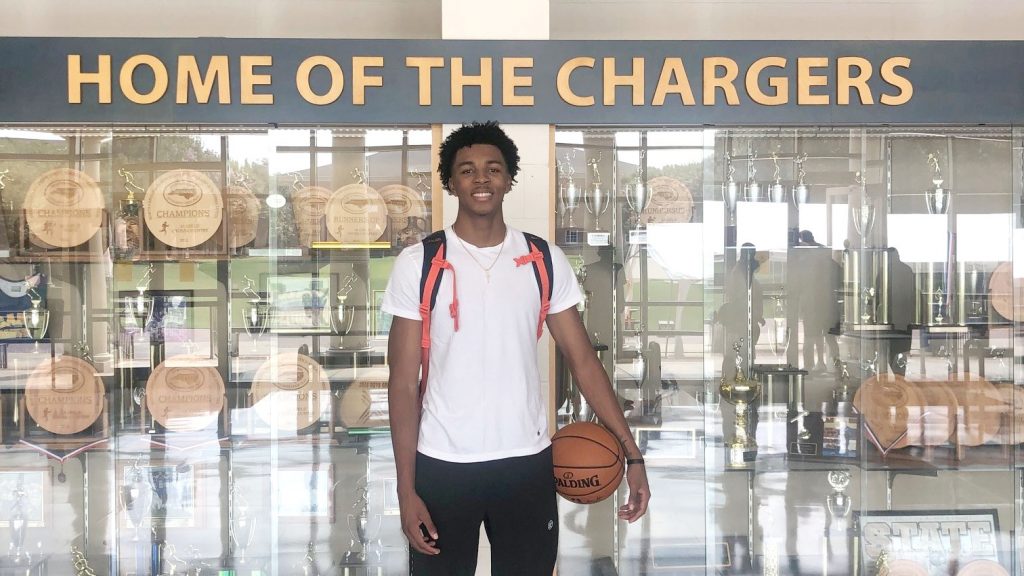
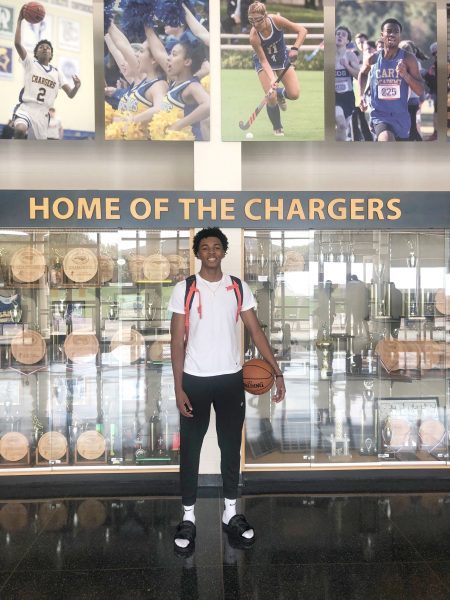
During last night’s 2021 NBA Draft, Cary Academy alum Trey Murphy III (’ 18) was drafted as the number 17 overall pick, landing a spot with the New Orleans Pelicans. With Murphy widely considered one of the most versatile players in this year’s draft class, the Pelicans’ pick has is being lauded by NBA analysts across the country. Earlier in the day, Murphy visited Cary Academy’s campus for a shoot-around in his old stomping grounds, the Fitness Center Gym.

Trey Murphy III '18 in the FC Lobby

The 6-foot-9-inch, 200-pound guard is the only player in University of Virginia history to post a 50-40-90 shooting season in 2020-21. Before transferring to UVA as a junior, Murphy led Rice University in scoring during his sophomore year. Because of the pandemic, the NCAA granted Murphy immediate eligibility, allowing him to play for the Cavaliers rather than requiring him to take a redshirt during the 2020-21 season.

Murphy, from Durham, played varsity basketball at CA. His father, Kenneth, played at East Carolina University from 1986-88.

Murphy averaged 22 points during his CA career while shooting 53% from the floor, 45% from three, and 93% from the free-throw line. He is Cary Academy’s all-time leader in field goals made, three-pointers made, and free throws made. During his senior year at CA, Murphy the Chargers to a 14-8 record, averaged 24.7 points and 7.4 rebounds while shooting on 49.4% from the floor, 43.6% from 3-point range, and 85.8% from the free-throw line. He was named All-Metro by the News & Observer. As a junior, he averaged 22.3 points, 4.3 rebounds, and 2.8 assists while shooting on 54% from the floor, 47% from three, and 93% from the free-throw line. He earned Triangle Independent School Athletic Conference (TISAC) All-Conference honors.

Written by Dan Smith, Digital Content Producer and Social Media Manager

CA Speech & Debate Shines at Carolina East District Tournament

Athletics

Senior Nights: Varsity Girls’ Lacrosse

CA Curious

Teaching beyond a single story