fbpx

Alumni Spotlight

Role of a lifetime

February 10, 2021

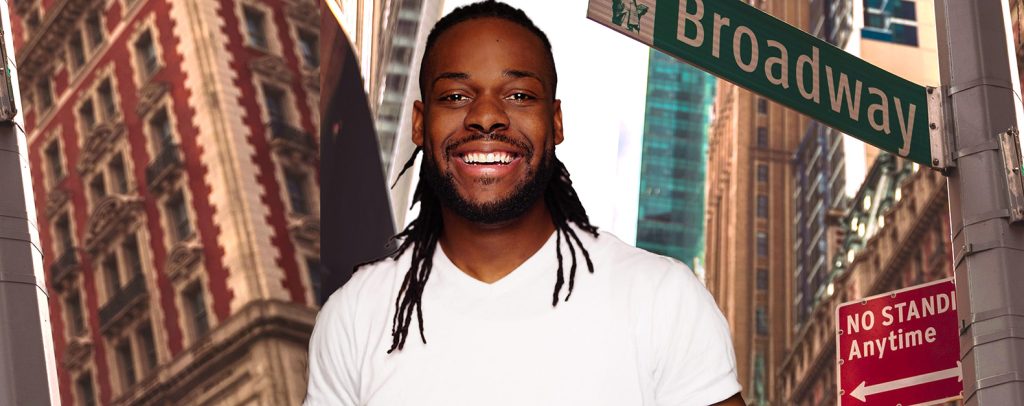
One of Broadway’s rising stars, Aaron Harrington ‘10 has accomplished in just a few short years what some actors might not in a lifetime. Now, having landed two major leading roles, one alongside a Grammy-nominated cast, Harrington eagerly awaits a return to the stage in a post-COVID world. He’s impassioned and ready to take on another big role—as an influencer activist on a quest to transform the industry he loves.

Taking the leap

Humble, grateful, and quick to count his blessings, Harrington is the first to admit that his creative and meteoric trajectory is perhaps not the norm—a far-cry, even, from the trope of the long-suffering artist.

Graduating from Shaw University in 2015 with a degree in mass communications, Harrington initially pushed aside early dreams of a career in performing. He planned, instead, to parlay his love of music and theater into a marketing career in the entertainment industry. Like so many artists, he set his sights on New York City—ostensibly to pursue a job with a large public relations firm.

It was a daunting transition—a major leap of faith—made possible by his mother and uncle, who, unbeknownst to him, purchased and presented him with a one-way ticket to the city.

“They conspired to push me to follow my dreams,” he reflects in hindsight, and you can hear the smile in his voice. “They knew that there was nothing left for me in Durham.”
Their bold strategy would coincide with the PR job falling through—happily, in retrospect—on his arrival to New York. And then, serendipity: a friend—a choreographer with whom he had worked on a community theater production of RENT in Raleigh his senior year—forwarded the call for auditions for the national tour. Harrington leaped
at the chance.

Familiar with the role, Harrington “showed up to the audition with nothing but my voice. I later found out was probably the craziest thing I could have done—to go to a New York audition unprepared.”

It was a huge risk—and one that paid off.

Mere months after arriving in New York, Harrington landed his first professional gig—bringing his signature baritone to the role of Tom Collins in the yearlong National 20th Anniversary Tour of RENT. RENT­—A Tony-award-winning modern-day retelling of La Bohème­—follows a group of young artists as they pursue their dreams against the backdrop of the HIV/AIDS epidemic.

RENT was my first big role, and I still get a lot of grief for it. I consider myself very, very blessed—not a lot of people can book something big within their first year of moving to New York City,” reflects Harrington. “I still to this day can’t believe it happened, but it did.”

Finding the spark

In truth, Harrington’s foray into musical theater is a relatively new pursuit in a longer creative journey, a return to a passion first ignited at CA that had long been pushed to the back burner.

Harrington, who grew up in Durham, transferred to CA in ninth grade from Durham Nativity School, a smaller independent school. He credits navigating CA’s larger, tight-knit community with the support of his fellow students and teachers with instilling in him a strong sense of confidence that empowered him to pursue his interests. He threw himself into the community, playing in both traditional band and jazz band and singing in chorus. An athlete, he wrestled and threw shot put for track and field.

“Cary Academy was able to take this really full of life kid and embrace him,” recalls Harrington. “I transferred into this community of kids that had been together since Middle School, but they welcomed me. It is an experience that I cherish.” He is still friends with many of his former classmates, many of whom were in the audience when RENT landed at the Durham Performing Arts Center in 2016.

At CA, Harrington got his first introduction to musical theater, albeit an initially reluctant one. “We did a production of Les Misérables in chorus. And, if I am being honest, I had no interest in doing it,” he reflects with a laugh. “But it was for a grade, so of course I did. After the production, I thought ‘that was actually really cool.’”

A trip to see Wicked at the Durham Performing Arts Center courtesy of then-Head of Upper School Mitch McGuigan would seal the deal: “Just watching the magic unfold on that stage—it was another spark.”

On graduation, Harrington headed to Shaw University, nursing a dream to be a backup singer and primed to pursue a degree in music. It was an important decision in his life.
“The dynamic at Cary Academy, a predominantly white institution, versus Shaw a historically black university—they were completely different,” offers Harrington. “It was nice to have that balance; it kept me grounded. I learned a lot at Cary Academy, and I went on to learn more at Shaw, not only academics, but culturally. At Shaw, I was diving back into some of the things that I was familiar with, had grown up with.”

Ultimately, a change in major his senior year would prove fortuitous, opening room in his schedule to return to musical theater. Over the next two years, he sought out opportunities in community musical theater, including Raleigh’s Theatre in the Park’s annual musical A Christmas Carol that played at DPAC and Raleigh’s Progress Energy Center, and a foreshadowing production of RENT with the North Raleigh Arts and Creative Theatre.

In that work, he discovered a true passion­—a spark of interest fanned into full flame.

“Music had always been my outlet, but to combine singing and acting, to have fun on stage, to dress up and be able to look through the lens of someone else and get that story for trade—there is nothing like it.”

Just do it

Harrington, who has debilitating stage fright, credits his willingness to take risks, be vulnerable, and lean into fear as the secrets to his success. The urgency of the pandemic has only served to deepen his resolve to pursue his dreams fearlessly.

“It sounds cliché, I know,” offers Harrington. “But life is short and unpredictable. COVID has shown us that anything can happen—life can go any kind of way with little warning. So, if you have a dream, embrace it fully—embrace the fear, the excitement, the anxiety. Take the leap, follow your passion—just do it.”

The lessons of mortality that the pandemic has cruelly taught for so many are those that Harrington himself learned early, with the death of his father when he was a senior in college. It was a dark, but transformative time.

“My father’s death pushed me to stop taking things so easily, to stop just riding the wave. It made me put myself out there instead,” offers Harrington. “That is what I’m currently doing. No matter how scared I am, I just go for it. My dad always wanted his kids to be great—so I’m always trying to make my dad proud, make my family proud.”

That fearless attitude was instrumental in helping him to land his second big role—as Audrey II in the off-Broadway production of Little Shop of Horrors—in early March of 2020. “I found out I booked it March 1, we rehearsed for two weeks, and then, then the world shut down.”

“At first, we thought we’d be back in three months—and that kept me going,” says Harrington. “But then, before you know it, we are hitting a year of life in this pandemic. Thankfully, our producers are committed; they’ve let us know that everyone aims to get the production back up and running. Knowing that in the back of my mind, it makes my future look just as bright as before—and it gives me hope that we will come back stronger.”

Actor to activist

For Harrington—who has discovered an activist calling during his pandemic-forced downtime—“coming back stronger” also means a broader, more meaningful embrace of the work of diversity, equity, and inclusivity.

Growing up listening to artists like Billie Holiday and Nina Simone, who figured prominently in the civil rights movement, Harrington has always appreciated the powerful connection between music and activism. However, it wasn’t until recently that he felt called to join their ranks and use his craft in the service of anti-racism.

“I’ve always thought my existence in this country, by itself, is activism,” reflects Harrington. “But the deaths of Botham Jean, Breonna Taylor, George Floyd, and so many others—the repeated injustices and the lack of support and accountability from those who are held so highly, those that have so much influence and power—it broke me. It really got me going, pushed me forward. I felt called to speak up and speak my mind and to match that with action.”

Harrington’s call to action coincides with a larger, welcome awakening across the entertainment industry. “It’s been great to watch as talent agencies, directors, and production companies begin to ask the right questions—to ask what we need to do to make our industry more inclusive, more anti-racist, more open to diverse voices and experiences.”

For his part, Harrington is committed to partnering with other artists to use his platform and visibility as an influencer to identify issues and potential solutions and to holding the industry, and himself, accountable to promises of positive change.

“When Broadway comes back, things still won’t be where they need to be. I want to be one of the voices that say, ‘this is what needs to be fixed, and you don’t know that it needs to be fixed because you’ve never acknowledged that it was broken.’ It is going to be a long process, but it has to start somewhere, and I’m ready to fight tooth and nail for it.”

For Harrington, much of that work turns on representation, ensuring that everyone has the opportunity not only to share the stage but see themselves and their experiences in the work.

“Representation matters,” offers Harrington. “Lots of shows have been on the right track in terms of casting actors of color, but there is a really big difference between casting from the BIPOC community for a BIPOC show versus casting BIPOC actors for a predominantly white show. And it isn’t just about race; as an advocate and ally for the LGBTQIA+ community, I want to see better representation for the trans community, for the gay community—they also need to be properly represented.”

As for what comes next for Harrington, the future is uncertain but bright. With signs that the pandemic might be waning, he’s looking forward to reuniting with his castmates—recently nominated for a 2021 Grammy award for best cast album (Harrington sadly joined the production too late to lend his voice to the album)—and to bringing Audrey II to life on the Little Shop of Horrors stage.

Beyond that, he’s energized by the prospect of bringing new, transformative productions to the stage and by opportunities to leave his mark on the roles ahead. He’s particularly keen to originate characters that embody authentic, diverse experiences and whose stories are groundbreaking and help to broaden perspectives and spark positive change—just as RENT did when it first premiered over 25 years ago.

“There’s nothing like originating a role, to being the first person to take it to the stage,” reflects Harrington. “The actors that come after you, you know, they give their input, but they will always know that Aaron Harrington did this role first, this is how he did it, these were the choices he made, this was his vision. And that’s pretty cool.”
Written by Mandy Dailey, Director of Communications

Community

Student service, affinity groups make news

Alumni Spotlight

Gridiron Insider

Alumni Spotlight

Reel Impact

Statculus

Art

Stats and Storytelling

February 10, 2021

Some of the newest, most eye-catching student art at CA isn’t in Berger Hall; it’s in a math classroom (no, that’s not a typo).

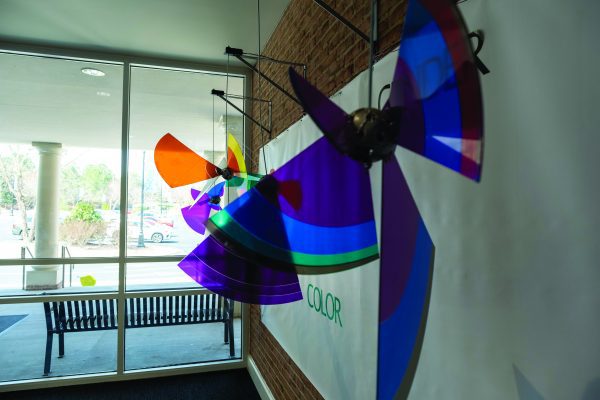
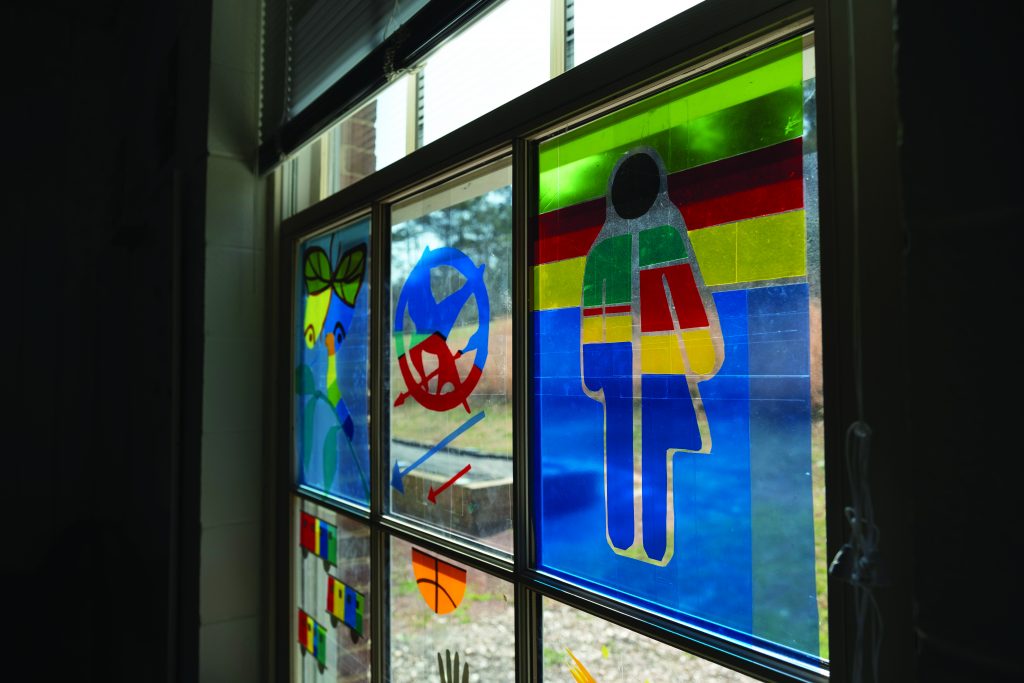
The windows of classroom 128 in the Center for Math and Science—the last classroom in the math wing—are lined with transparent vinyl “stained-glass” suncatchers. When struck by sunlight, colorful railroad cars, peacocks, butterflies, lightning bolts, food pyramids, and abstract hearts throw their colors around the room to magical effect.
Make no mistake—these aren’t just eye- (and sun-) catching artwork. Produced by Upper School Statculus students, they are the latest student-generated data visualizations to grace the Center for Math and Science—every element a deliberate choice to draw the viewer in, to convey a compelling story behind the numbers.


Led by Upper School math department chair Craig Lazarski, Upper School math teacher Kristi Ramey, and art and design teacher Cayce Lee, Statculus offers a deep dive into the connection between calculus and statistics, with a hefty dose of visual arts mixed in. In class, students engage with real-world data to conduct sophisticated analysis, tease out important conclusions, and depict them in compelling and beautiful visualizations.


Those beautiful suncatchers? They reflect student learning in sampling methodologies and complex data analysis. Each represents an opinion data set collected from peers and faculty and parsed using analytical tools that students learned from class. In an array of carefully calculated designs, they offer insights into our community’s preferences—from favorite colors to superhero movies, Hogwarts’ houses sorting to family relationships, sleep habits to dietary choices, and more.


“Your first impression may not be that these are numbers that you’re looking at, but once you think about what you’re seeing, it becomes what Kristi calls a ‘gut-punch’; it communicates something important in a powerful way,” says Lazarski.


Point of Origin


And that, of course, is precisely the point. The ability to work with, interrogate, and powerfully communicate data is particularly timely in a world awash in statistical claims.
“The misunderstanding that people can ‘lie’ with statistics is one of the key reasons everyone should take statistics,” offers Ramey. “It’s not that the statistics are lying; it’s that you don’t know how to interpret the data or that the data is being visually misrepresented.”


Created by Ramey and Lazarski as the product of a 2018 Curriculum Innovation Grant, Statculus was conceived to expand CA’s statistics offerings to better meet the needs of our academically diverse student body.


“We had a wide spectrum of skill levels in a single statistics class—from students who were taking collegiate-level Calculus 3 to those who had recently completed Algebra 2,” explains Lazarski. “Rather than repeat material for students who had already taken calculus and try to bring students who hadn’t up to speed, we decided to offer a more specialized statistics for those students already versed in calculus.”


The result—Statculus—is something akin to a graduate-level statistics course, uniquely tailored to their students’ skills. (It doesn’t hurt that both Ramey and Lazarski are currently pursuing graduate degrees in statistics at NC State University and regularly incorporate material they encounter into their classes).

However, they are quick to point out that mathematics is only one part of the statistics puzzle; communication of the data is equally important. “Statistics is all about communicating. It’s what distinguishes statistics from its calculus lineage,” explains Ramey.


Getting an eye for visual learning


That’s why, in recent years, Statculus has evolved to include a significant and crucial data visualization component, courtesy of a collaboration with Upper School art and design teacher Cayce Lee, and facilitated by yet another professional development opportunity—this one from the North Carolina Museum of Art (NCMA).


The NCMA’s Fellowship for Collaborative Teaching pairs educators from various fields of study who are committed to using art to engage students in new ideas and deepen their problem-solving and critical thinking skills. On hearing of the opportunity, Lee immediately thought of partnering with Ramey, who had long expressed an interest in combining art and math in the classroom.


Selected for the fellowship, in the summer of 2019, Lee and Ramey joined ten fellow educators from across the state in a series of intensive seminars and workshops to design curricula that combined art with other disciplines in meaningful and engaging ways. As the first math-focused pair selected for the fellowship, Lee and Ramey broke new ground for the NCMA program, then in its fourth year, according to Jill Taylor, Director of School and Teacher Programs at NCMA.

Statculus


For both, it was an eye-opening and fruitful experience, one that underscored not only the vital role of data visualization in statistics, but the importance of visual arts—of color and composition and narrative—in data visualization.


“With artful data visualization, statistics can achieve an emotional response from the audience,” offers Ramey. “Data visualization allows us to provide a point of view along with communicating data. Instead of ‘here’s a pie chart,’ it’s ‘oh my gosh, that was really impactful, and I now see it differently.’”

Clarity of vision


With the COVID-19 pandemic disrupting students’ opportunities to work together in large groups, Lazarski, Lee, and Ramey had to rethink the scope, scale, and purpose of this year’s Statculus data visualization project.


“Last year, we focused on developing students’ communication skills, and their grade was mostly derived from their presentations. Virtual and hybrid learning made that next to impossible, so this year, we leveraged a partner art project to provide that opportunity for them,” says Lazarski.


As the suncatcher project was conceived, students were granted control over the data they would collect and analyze, as well as the designs that their suncatcher would use to visualize their results. Students collected and analyzed the data outside of class and then used weekly Flex Days to collaborate and develop their data-driven artwork.


To prepare, Lee introduced students to artworks that incorporated data in thought-provoking ways, such as Timo Aho and Pekka Niittyvirta’s light-painted series on sea-level rise, Mike Knuepfel’s sculptural interpretation of keyboard letter usage, and Blake Fall-Conrony’s Minimum Wage Machine, which provides a tangible sense of how much work is required to earn so little.

It had an impact.


“Usually, when we ask students to take data and do something more with it, what results is a bigger bar graph,” smiles Lazarski. “But our students, inspired by what Cayce had shared, really ran with the suncatcher project. They put careful consideration into the questions they would ask and the best way to produce them as impactful visuals.”


“I have always thought that math is beautiful, but I was excited to present it beautifully!” reflects Shannon Jenkins ’21. “I think my favorite part of the project may have been measuring out the angles that my partner, Sanjana Chillarege, and I used. We had to constantly adapt our methods to make sure that our proportions were accurate.”


“When we first were assigned the project, I was a little overwhelmed—I had no idea how to approach it,” says Samantha Lattanze ’21. “Working through the project step-by-step helped me enjoy the process and provided me with a new lens on math.”


For the teachers, too, it was a rewarding experience. “It’s been fantastic to see students in a different context than the art studio,” offers Lee. “Getting to revisit a key lesson I teach during the ninth-grade art and design class—that visual communication is the most universal form of communication—with real-world applications is particularly rewarding.”


Beyond the classroom

And it is perhaps that real-world application that best prepares Statculus students for what comes next—helping them to better grasp the material by getting truly-hands on, encouraging them to delve into areas of knowledge that they might not have sought to explore, all while honing communications skills that will serve them long after their time at CA.


“Almost every field is about collecting information and analyzing it in today’s world,” says Ramey. “Either you’ll have to interpret data analytics or interpret data yourself. Those communication skills are key in a world increasingly driven by data analysis.”


Lazarski agrees, “Every year, I get emails from young alumni who say, ‘I’m so glad that I took statistics at CA; I use it so much in college, and I wouldn’t have gotten so far without taking it in high school.’”


Across campus, CA students are taking note of the increased visibility of statistics thanks to the installation of Statculus students’ data visualization pieces. “Students in other classes have been intrigued by the suncatchers,” says Lazarski.


“After taking part in the surveys, they have been fascinated by how the results were presented and the notion that meaningful data could be visualized in a non-traditional way. And that you can have fun and make an impact in the process.”

Data Art

This year’s sun catcher project is not the first data visualization project to adorn the Center for Math and Science. Through Lee and Ramey’s NCMA fellowship, last year’s Statculus students were invited to visit the North Carolina Museum of Art and leverage the museum’s collection as data points for a data visualization project.

Statculus


Breaking into teams, students analyzed the museum’s vast collections based on artists’ gender, nationality, media used, and composition. With data sets in hand, and in consultation with RTI researcher and data visualization expert Simon King via Zoom (before it was the cornerstone of meetings in 2020), students worked with Lazarski, Lee, and Ramey to design an art installation that would shed light on the strengths and shortcomings of the museum’s holdings while engaging viewers to learn more.


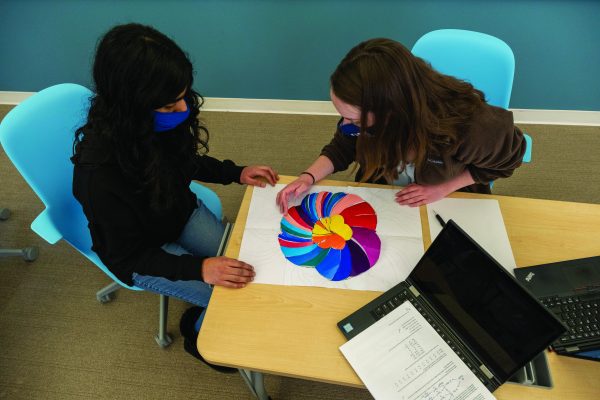
Inspired by Florence Nightingale’s pioneering data visualization work, Diagrams of the Causes of Mortality, which used a coxcomb—a more sophisticated form of a pie chart in which the slices are subdivided and vary in radius in proportion to the data set—and utilizing the cutting-edge tools of the CMS Makerspace and know-how of design, programming, and robotics teacher Betsy MacDonald, the students created three-dimensional coxcomb spheres that are suspended in the Center for Math and Science’s atrium lobby.


Each sphere—crafted from a Wiffle ball, wedges of plexiglass, and transparent vinyl appliques—is mounted on spindles that allow them to rotate. Putting the data in motion seeks to engage viewers, allowing them to see the relationships between the complex layers of data in greater detail.

Written by Dan Smith, Digital Content Producer and Social Media Manager

Athletics

Chargers Wrap a Record-breaking Year for Athletics

6th

CA Science Olympiad Success!

Donor Stories

Promise Made Possible

Upper School ceramics students

CA Curious

Essential Arts

October 8, 2020

Curious about how the Arts at CA are adjusting to this most unusual time?  Read on…

Back in the summer, when it became clear that the new school year would be anything but usual, we were asked to rethink our core curricula and focus on the “essential.”  We had already made a great pivot back in the spring as we went entirely virtual. So, when it became clear we needed to prepare for the possibility of more virtual, and eventual Blue and Gold and even Purple cohorts, the arts faculty began planning. There were so many unknowns, how could we adequately adjust? 

Fortunately, over the past few years, we’ve been actively engaged in curriculum renewal, consistently examining our offerings and practices to ensure our courses are relevant, engaging, and inspiring.  This longstanding work has left us well-prepared for the challenges that face us now.

First, we re-examined our Arts philosophy and reaffirmed these guiding principles that have sustained us in the past:

The Arts at CA foster a diverse community of creative, empathetic students who embrace their unique passions and talents to make purposeful impact.

We believe that:

  • Studios are safe spaces for students to discover techniques and skills to create original, exciting, inspiring, and relevant works
  • Students will thrive in an atmosphere that is collaborative and inclusive and supportive of their journey in discovering their artistic voices
  • The artistic process encourages play, curiosity, experimentation, and risk-taking
  • Art making is essential to our humanity

Then, using design thinking, each faculty member worked diligently to understand how these guiding ideas would translate into concrete initiatives in the new year. We knew we must continue to develop creative confidence, rebuild and foster community by supporting ensembles and collaborative teams, and flex to support all our students as they pursued their journeys. 

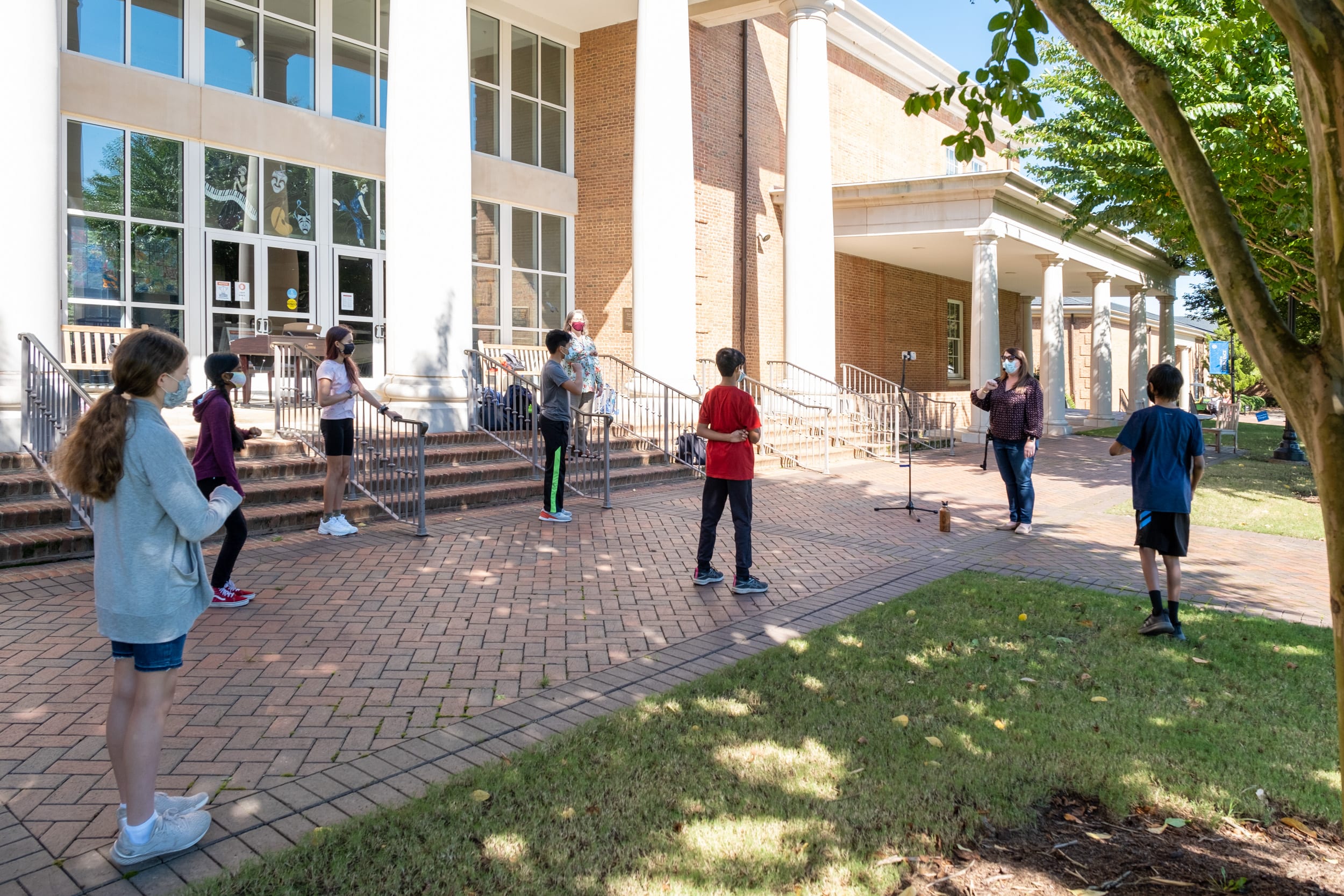
First and foremost, we wanted to ensure that our studios are safe. To that end, visual arts and other teachers assembled packets of materials that students could take home so that they each had the tools necessary for success. Music students were supplied with digital tools for easy access to sheet music and the learning of music theory. We rearranged classrooms to ensure social distancing. Teachers were provided webcams, ring lights, audio interfaces, and other devices so that virtual classes would be professional and effective.

We encouraged students to design their own at-home studios and rehearsal spaces. Teachers developed units that allowed students to explore and experiment with materials and processes. We still want students to play and collaborate, although the notion of risk-taking has taken on an entirely new set of precautions. 

Art-making remains essential in these new and challenging times and CA has provided a wide array of materials and resources, and our students are resilient and engaged, as always.  Many exciting things are happening. After just a few days in the new age of cohorts, what does this look and sound and feel like?

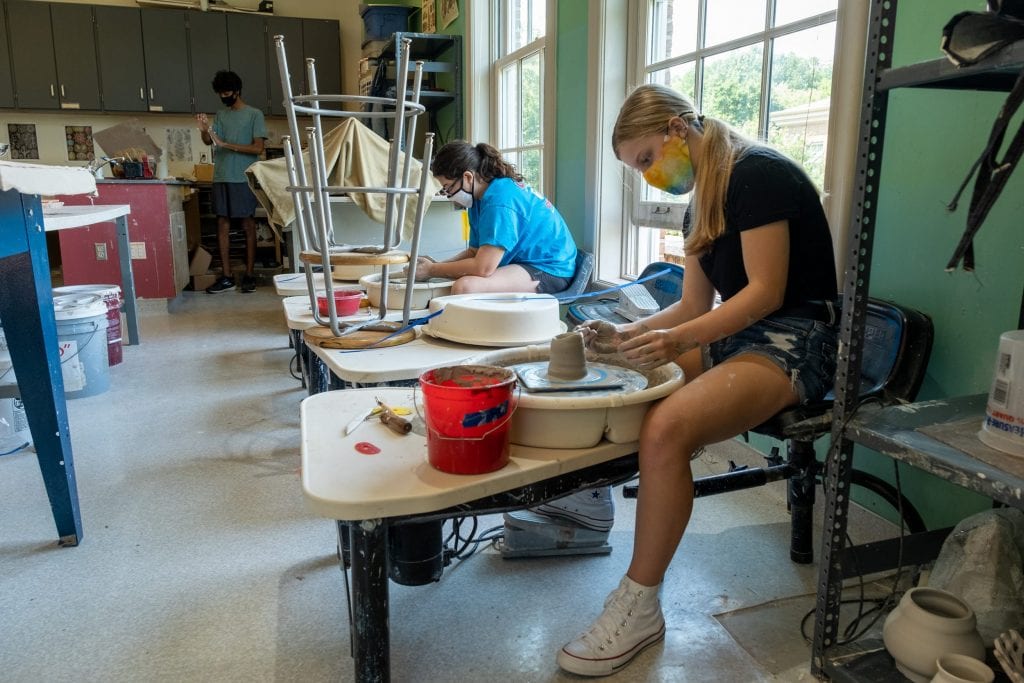
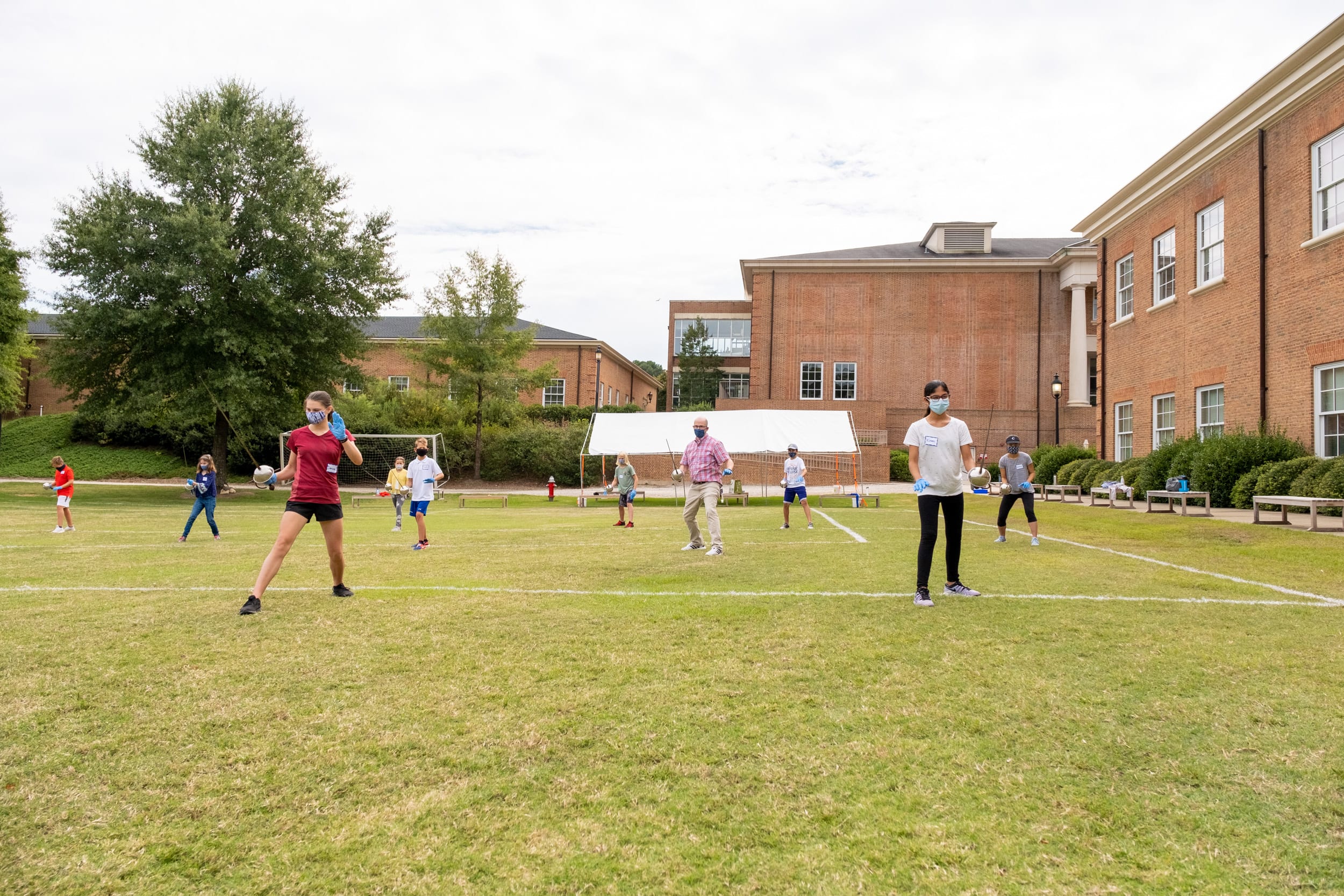
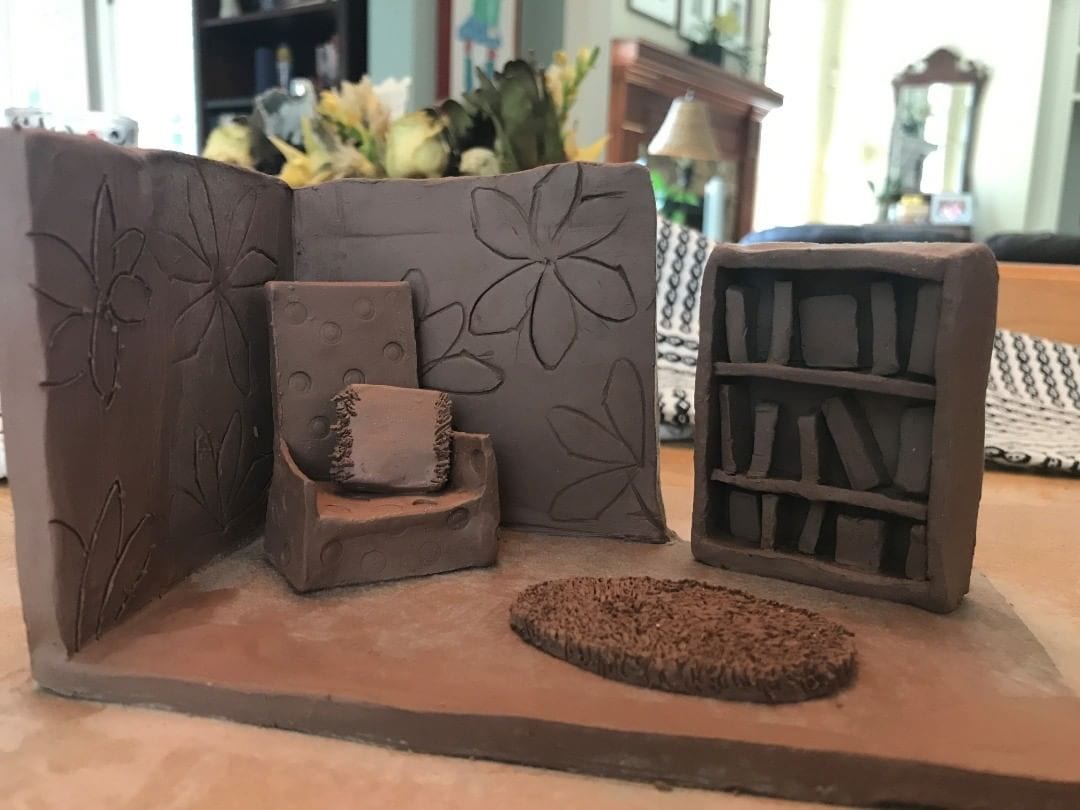
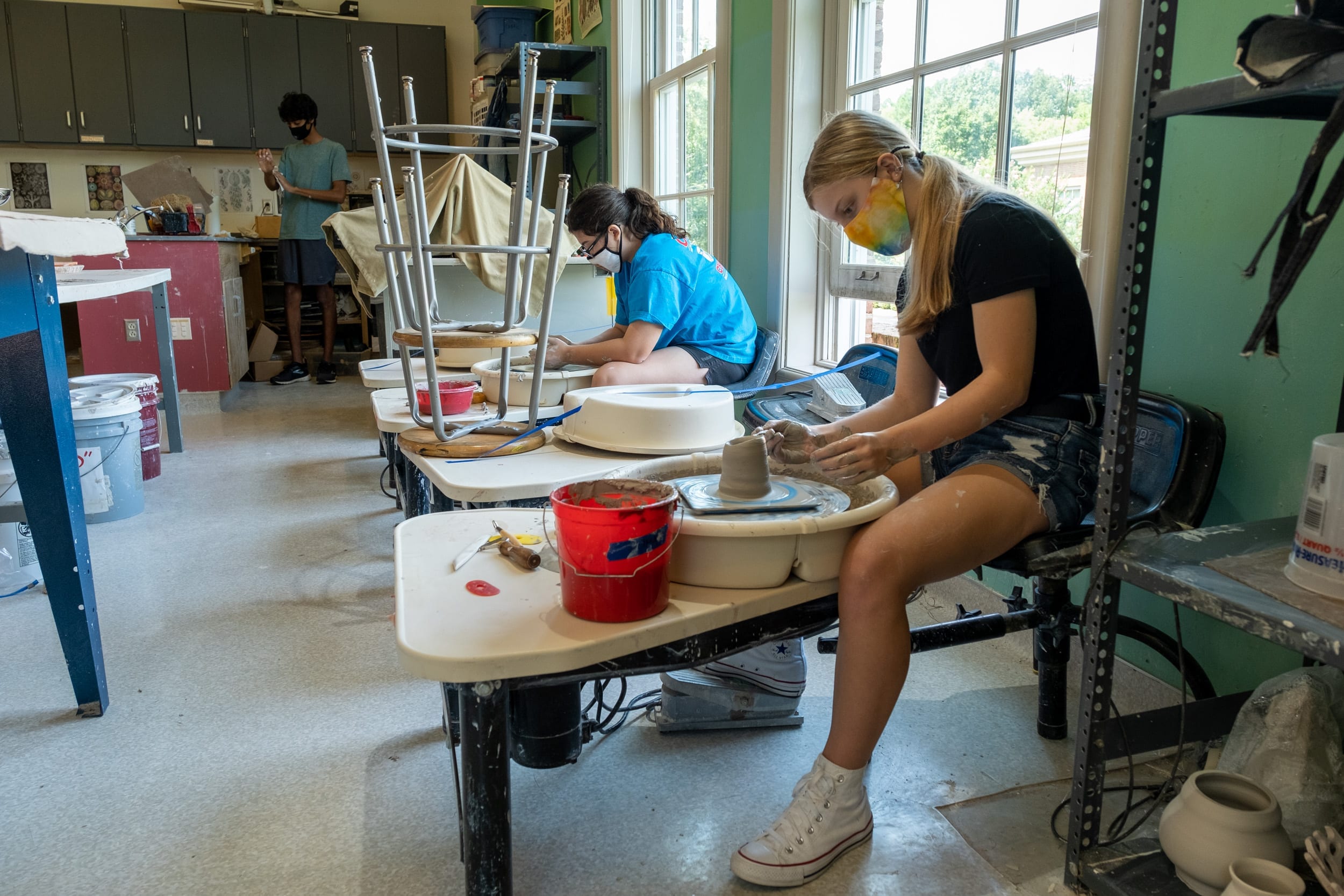
We hear music once again—singing and playing and dancing and laughter.  Pictures are being drawn; paintings are coming to life; ceramics are being fired and glazed.  Virtual objects are being designed for 3-D printers. There’s been a workshop in sword play; video scripts are being imagined and written for future filming.  We’ve turned the stage in Berger Hall into a digital video studio, and we are recording students improvising and playing classical music.

Slowly, but certainly, the joys of creating and performing are coming back to the campus. Is it sometimes weird and challenging?  Yes.  Is it the same as a year ago at this time?  Not at all.  But from what I can tell as a non-casual observer, it’s beginning to look and sound familiar. Students seem relieved and excited to be together.

Is it hard?  Yes. But, teachers are working diligently to get to know each of their students. They are finding their once-familiar rhythms again—as the creative processes that we once took for granted, but were forced to retool or suspend for these many months, finally re-emerge. 

In this disruptive and sometimes upside-down world we find ourselves in, here in the fall, it feels like spring again!

I welcome your questions and comments and suggestions about how the arts are helping to rebuild our community.  You can contact me at michael_hayes@caryacademy.org

My best to all our families and students, with confidence in our collective creative energies,

Michael Hayes
Arts Director

Written by Michael Hayes, Arts Director

CA Curious

Charting new wellbeing territory via virtual counseling

CA Curious

Time Well Spent

CA Curious

Gravel Road Lessons: The Serendipity of an X Day

Lester Turner - band

Middle School

CA Bands finish out the year on a high note

June 12, 2020

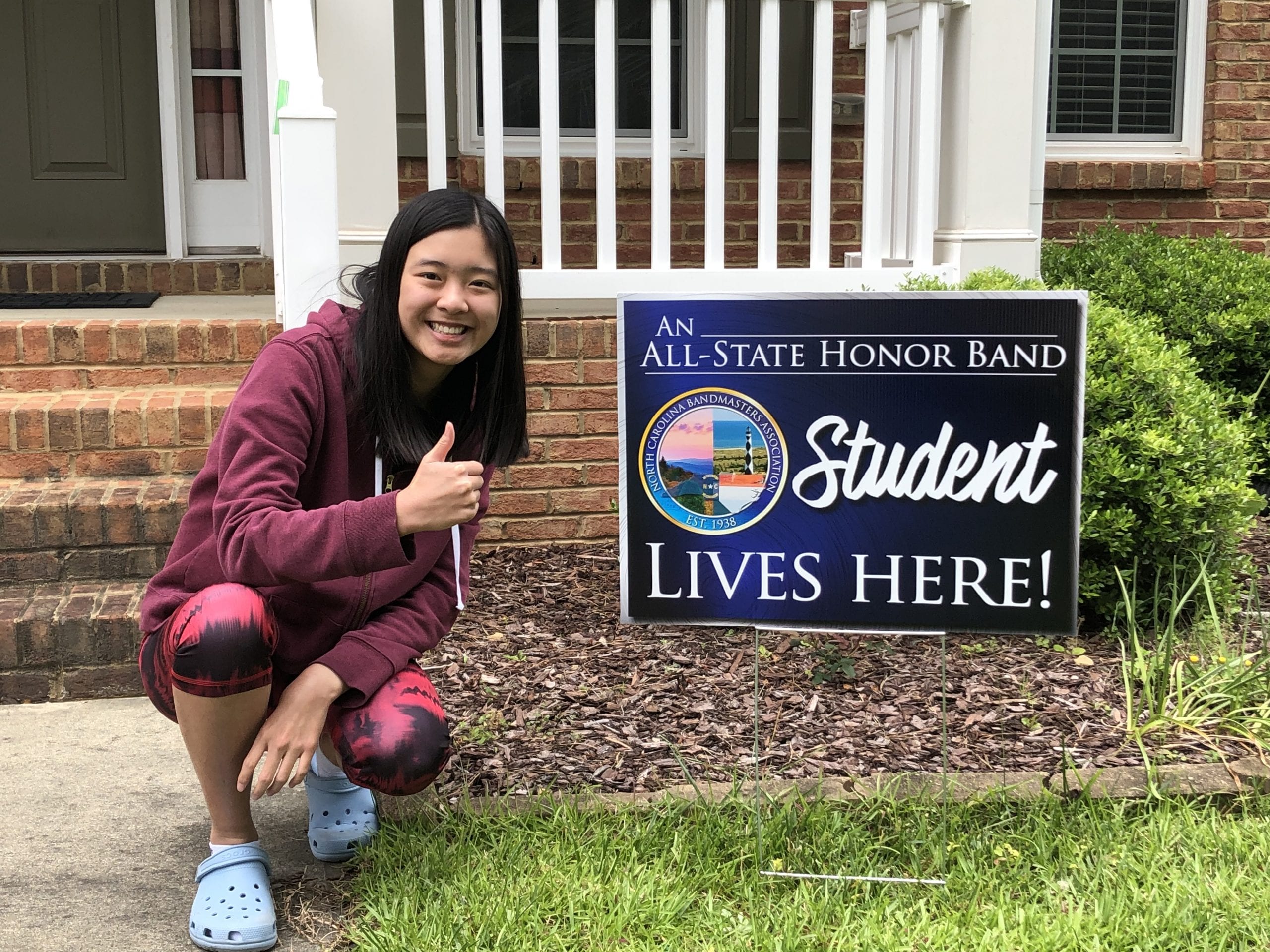
Three CA students not only made the 2020 NC Music Educators Association All State Band and All State Jazz ensembles but earned the top chairs for their instrument in each of the bands.

The outstanding musicians receiving these honors: Marvin Koonce ’21 – Piano for All-State High School Jazz, Abby Li ’22 – 1st Chair Flute for All-State Honors Band, and Luke Ramee ’24 – 1st Chair Trombone for All-State Middle School Jazz. Koonce and Li have applied for the 2020 All-National Ensemble which will happen in Florida during the fall. Li was also awarded a chair placement in the All-State Orchestra ensemble, also set to happen in the fall.

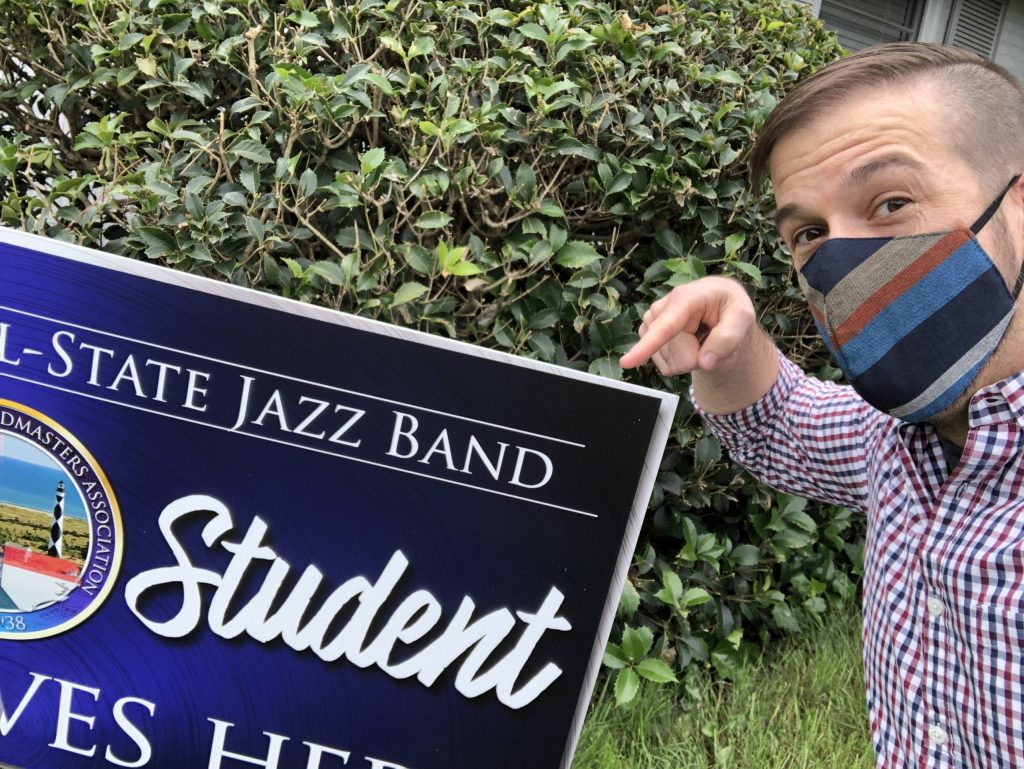
To celebrate their achievements, Director of Bands Lester Turner delivered yard signs to CA’s All State Band members.

In addition, Mr. Turner has shared two tunes the students worked up over final trimester of 2019-20, to brighten our week and hold us over, while we wait for their next concert.  As Mr. Turner explains, “performing for friends and family is a big part of the Band experience and we will have to hold off on that for some time yet.  These videos though will be able to be sent out to the students’ contacts virtually and share a little of what they have been doing.”

Midle School 7th and 8th grade band performing Skygazer by Randall Standridge:

Upper School Wind Ensemble performing Brave Spirit by Randall Standridge:

Both are by Randall Standridge, who has been kind enough to allow his works to be performed freely virtually during the COVID-19 pandemic.

Written by Dan Smith, Digital Content Producer and Social Media Manager

Middle School

CA teams get with the (computer) program

Latest News

MS Science Olympiad Team Finishes in Top 10 at States

Athletics

Senior Nights: Varsity Girls’ Lacrosse

Visual Arts Showcase 2020

Middle School

Middle School visual arts showcase for 2019-2020

June 5, 2020

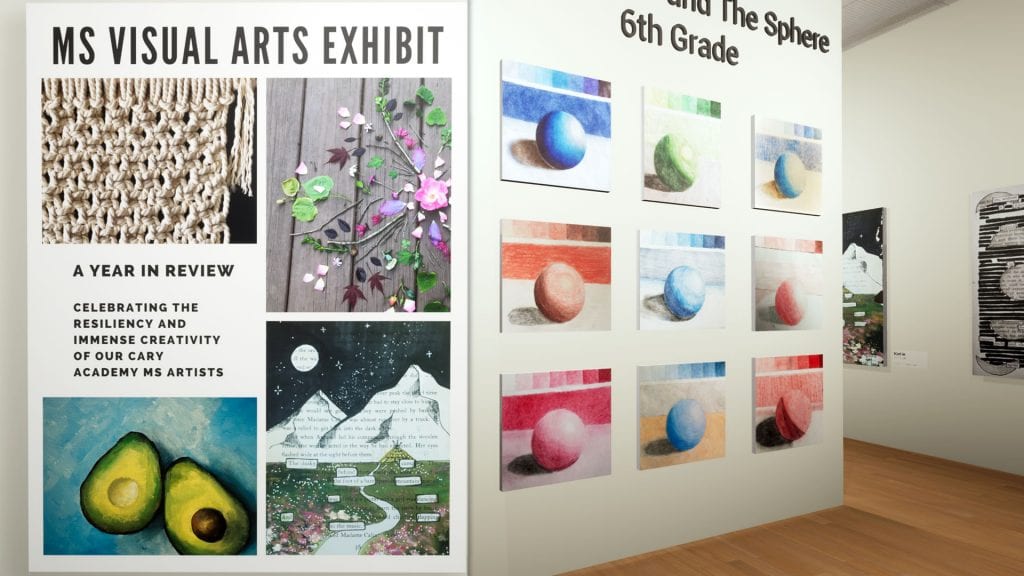
Traditionally, as the school year comes to a close, works by Middle School arts majors and sixth-grade art students are exhibited in Berger Hall as part of the Middle School Arts Showcase. With the move to virtual learning, CA’s traditional showcase isn’t possible. Thanks to Middle School visual arts teacher Alyssa Armstrong, you can enjoy the work of CA’s talented Middle School artists in our virtual visual arts showcase.

Written by Dan Smith, Digital Content Producer and Social Media Manager

Magazine of CA

Let Us See You Flex

Athletics

Senior Nights: Girls’ Varsity Track and Field

Alumni News

A Home Court Advantage

News

Varsity robotics claims first tournament win in program history

March 2, 2020

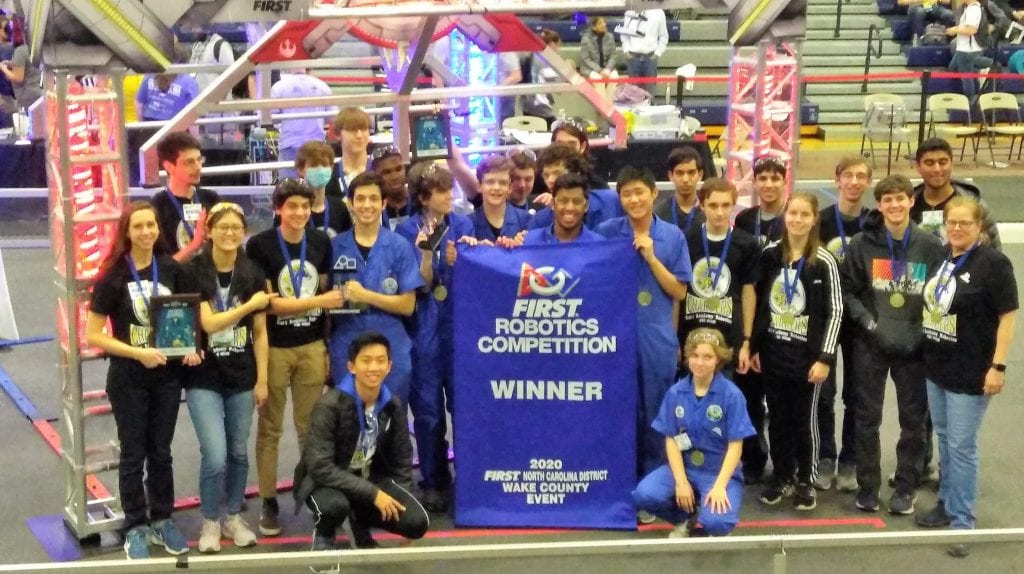
During CA varsity robotics’ best performance in their seven-year history, the Chargers went 18-0 to claim their first-ever FIRST Robotics Competition (FRC) tournament.

In the qualifying rounds, where 3-bot alliances are randomly created, CA’s robot charged off to a 12-0 record. It was not a breeze, though, as there were two matches that on paper looked like they would favor the opponent. However, CA’s extremely reliable bot consistently performed the scoring elements, including a climb at the end of the game where the bot does a robot version of a chin-up on a moveable beam. This proved to be crucial to the teams’ success because, in 18 matches, Bartholomew Richard Fitzgerald-Smythe (yes, that’s the robot’s name) successfully climbed 17 times. After match one, the win gave them the #3 rank, and they vacillated between 2nd and 3rd for a few matches. It wasn’t until their fifth victory that the team secured the #1 spot and never relinquished it — despite some heat from a fellow Cary team, Cortechs Robotics, who also went undefeated. The scoring system in FRC rewards winning alliances two ranking points per win, and an additional ranking point, if two robots are a able to climb and balance the moveable beam. The Chargers were able to secure that extra ranking point five times in the qualifying matches, while Cortechs’ alliances earned three ranking points only twice. That was the difference in the Chargers being ranked #1 with the Cortechs’ at #2.

At the end of the qualifying matches (where the alliances had been randomly assigned), there is an Alliance Selection process where the top 8 seeds get to choose who they want on their alliance for the rest of the tournament. As the number 1 seed, the Chargers got first choice and it was a no-brainer to go with the only other undefeated team, especially since their strategies were very complementary and had collaborated well in a qualifying match when they had the first successful balanced climb of the tournament and achieved (at the time) the highest score of the day. With Carrobotics (out of Chapel Hill) as the third bot to round out the alliance, they headed in the quarter-finals. In playoffs, alliances must win two matches to move on. If you’ve done the math, it only took two matches in each of the quarters, semis, and finals to be declared the winner of the Wake District FRC event. Win a win, comes a blue banner, and CA was finally able to bring home that elusive blue banner. They were also recognized as having the best autonomous program for consistency and reliability.

Please join me in congratulating the Chargers for their first-ever appearance on the #1 seed, highest seed they have ever captained, first-ever undefeated tournament, and first-ever tournament win. This puts them in an excellent position to play in the State Championship, as they currently have 78 district points. District points are awarded at the first two tournaments that teams attend, so it’s a cumulative process. However, with such a strong showing and an extremely reliable bot, the Chargers will likely qualify. Their next tournament is March 21-22 at Guilford HS, with the NC Championship on April 4-5 at Campbell University.

If you want to see more statistics or replays from the event, visit https://www.thebluealliance.com/team/5160/2020

Thank you to all the parents for their continued support, to the awesome kids, and to their other coaches Rachel Atay and Scott Allred.

Go Chargers!

Betsy MacDonald – US Design, Programming, and Robotics

Written by Betsy McDonald, US Design, Programming, and Robotics

Middle School

Spotlight On: Affinity Groups

CA Curious

Lightbulb moments

CA Speech & Debate Shines at Carolina East District Tournament

JV robotics

Upper School

JV robotics teams overcome challenges at qualifying tournament

January 23, 2020

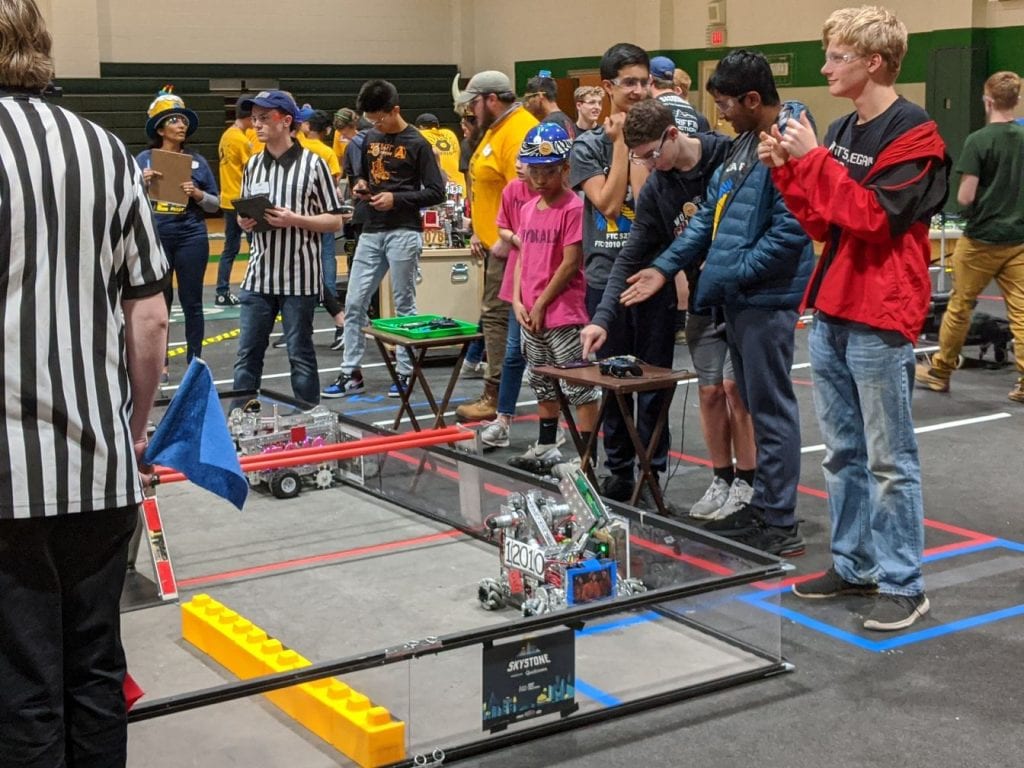
Please join me in celebrating the JV Robotics teams who competed this past Saturday. FIRST Tech Challenge (FTC) team 5270 consisting of Casey Cervenka ’21, Ethan Chou ’22, Alex Dietrich ’22, Alekh Palakurthi ’22, Casey Powell ’22, Price Taylor ’22, and Vinith Upadhya ’22 started the morning furiously trying to downsize their robot as it wasn’t within specifications. They missed their first (of five) matches because of this, but never hung their heads nor grumbled, instead working hard to fix it to play in their final four matches. Because of their enthusiasm, graciousness, and grit, they received the Motivate Award at day’s end.

I also tip my hat to them for their leadership and grace in helping and cheering on the freshmen team FTC 12010, made up of Harrison Coman ’23, Andrew Epperson ’23, Rohen Giralt ’23, Brennan Hugo ’23, Vikram Kommareddi ’23, Jay Sihm ’23, Rhoda Yakowenko ’21, and Leo Yu ’21. Attending their first tournament ever, they made quite an impact, at one point holding a #3 ranking of the 26 teams in attendance. They were selected to be on the second-seeded alliance, and in the semi-finals, their alliance beat the third alliance in three matches to reach the finals. In the finals, they were matched against a formidable number 1 seed. Good driving, teamwork, and coolness under pressure combined with a couple of mistakes by their opponents lead to our alliance besting the first seed, again in matches. Congratulations to 12010 for winning their first-ever tournament! And another kudos to 5270 for leading the way.

The teams will compete again when Cary Academy hosts their next tournament. Mark your calendars for Saturday, February 8, from 10:45am-5:00pm so you can come cheer on Team Q (5270) and the ChargerBots (12010) as they look to qualify for the state tournament.

by Betsy MacDonald – US Design, Programming, and Robotics

Written by

CA Curious

Trying it on for size

Latest News

CA Math League Results 

Head of School Search

Head of School Finalist Candidate

Library from quad

Six CA students named to All-State Orchestra

January 17, 2020

Six Upper School students were named to the NC Music Educators Association 2020 Eastern Regional All-State Orchestra:

  • Symphony Orchestra 1st violin section: Sophia Liu '22, Jessica Zhong '20, and Grace Chow '21
  • String Orchestra 1st violin: Vinith Upadhya '22
  • String Orchestra 2nd violin: Joshua Kendall '23 and  Rhoda Yakowenko '23

Written by

Alumni News

Feeding Frontline Workers, One Shirt at a Time

CA Curious

Essential Arts

Health

Taking Time to Recharge

Latest News

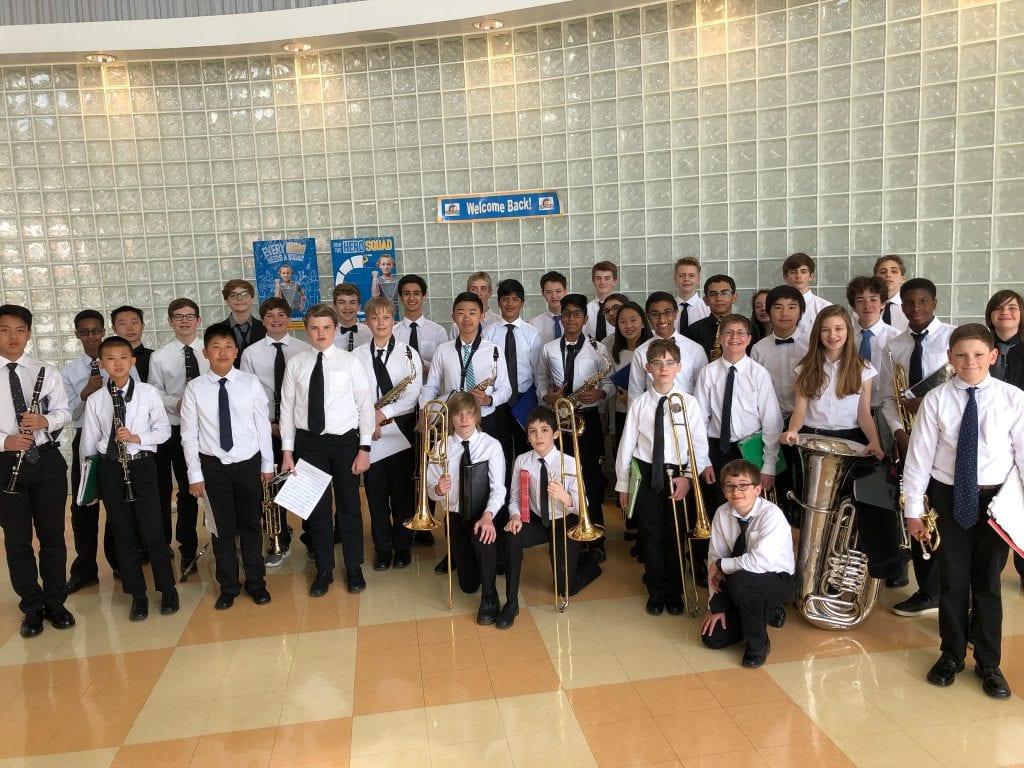
Middle School band awarded top honors

March 20, 2019

The Middle School Band was Awarded the top honor of Superior from the judges, yesterday, at the NC Central District Bandmasters Association Music Performance Adjudication (MPA).  An MPA is a music performance festival and competition in which dozens of schools from across the state compete.

The group did a wonderful job and Band Director Lester Turner is excited to report that all of their energy and efforts paid off in the best way possible.  The last time Cary Academy’s Band received a Superior at MPA was back in 2007. Turner explains, “this is a fantastic success for the group and will help drive us forward…  I hope all the students enjoyed the experience and I know for me, it was awesome to make music with them.”

Please take a moment to congratulate them as you see them around campus.

We hope you will join the CA Middle School band for their spring concert at CA on Thursday, April 4th at 7pm.

Written by

Magazine of CA

Beyond Numbers

Alumni News

From Code to Cure

Latest News

AI Experiential Workshop Series Comes to an Exciting Close